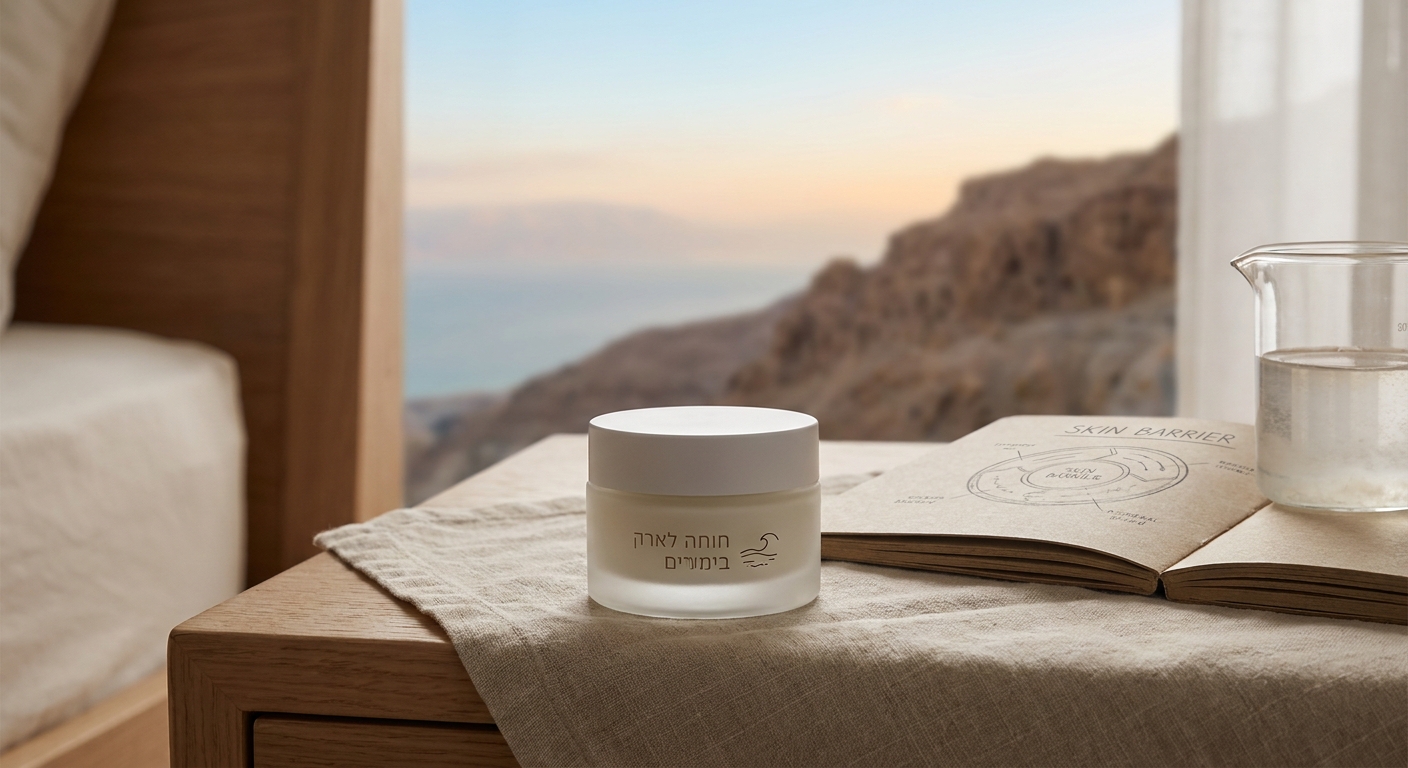
If you have sensitive skin, one bad Dead Sea product can put you off the whole category for years. Fair enough. Maybe it stung. Maybe it left you red for hours. Maybe a mall kiosk salesperson rubbed something on your hand so aggressively you swore off mineral creams for life. The good news is that newer Israeli formulas are often very different from those older, harsher products. Labs have started using smaller amounts of Dead Sea minerals, pairing them with barrier-friendly ingredients, and cutting back on heavy fragrance and the “tingly means it works” nonsense. That means a gentle Dead Sea mineral cream for sensitive skin is no longer a contradiction. It is a real category. The trick is knowing what to look for on the label, what product type to start with, and how to avoid turning a nice idea into another skin flare. Here is the simple version, without the sales pitch.
⚡ In a Hurry? Key Takeaways
- A gentle Dead Sea mineral cream for sensitive skin usually uses minerals in smaller amounts and mixes them with soothing, barrier-support ingredients.
- Start with a basic moisturizer or hand cream, patch test first, and avoid strongly perfumed or exfoliating formulas.
- If the ingredient list is clear and the claims are modest, you are more likely looking at a safer, more modern Israeli formula.
Why Dead Sea skincare got a bad reputation with some people
Dead Sea minerals have a strong wellness halo around them, and not by accident. Magnesium, potassium, calcium and other mineral salts are linked with skin comfort and moisture balance. But older products, or just badly designed ones, often pushed the mineral side too hard.
That can be a problem for reactive skin. High salt content, strong fragrance, essential oils, harsh scrubs, and active ingredients mixed into one “miracle” cream can all tip sensitive skin into burning or redness.
So when people say, “My skin hates Dead Sea products,” what they often mean is, “My skin hated that one overstuffed formula.” That is an important difference.
What “micro-dose mineral” really means
This is not a strict medical term. It is more of a smart formulation approach.
Instead of loading a cream with a dramatic amount of Dead Sea salts, newer products may use a smaller, better-tolerated level of mineral extract or mineral-rich water. Then they support it with ingredients that help the skin barrier stay calm.
What that looks like in practice
A gentler formula may include:
- Dead Sea mineral water or mineral extract, not just raw salt pushed high up the formula
- Glycerin for hydration
- Squalane or light plant oils for softness
- Panthenol, allantoin, or bisabolol for comfort
- Ceramides or cholesterol for barrier support
- Hyaluronic acid in modest amounts for water binding
The minerals are still there. They are just not trying to bulldoze your skin.
How to read the INCI label without needing a chemistry degree
You do not need to memorize every ingredient. You just need a few clues.
Good signs
- Dead Sea Water, Maris Aqua, Dead Sea Salt, or a mineral complex listed somewhere in the formula, but not necessarily right at the very top
- Soothing helpers like Panthenol, Allantoin, Beta-Glucan, Bisabolol, or Aloe Barbadensis Leaf Juice
- Barrier ingredients like Ceramide NP, Squalane, Glycerin, and Shea Butter in a balanced cream
- Clear, boring claims such as “moisturizing,” “for sensitive skin,” or “fragrance-free”
Proceed with caution
- Strong fragrance listed high up as Parfum or Fragrance
- Lots of essential oils like citrus, peppermint, or eucalyptus in a leave-on face cream
- Exfoliating acids mixed into a “calming” mineral product, such as glycolic acid or high-dose salicylic acid
- Menthol, alcohol denat., or scrub particles in products sold as soothing
If your skin is reactive, simpler is usually safer.
Which product type should you start with?
Do not begin with the most dramatic thing on the shelf. Start with the lowest-risk format.
Best first step
A basic mineral moisturizer or hand cream is often the smartest entry point. These are easier to patch test and less likely to contain intense actives.
Good second step
A gentle body lotion can work well if your face is extremely reactive but you still want to see how your skin handles the mineral blend.
What to avoid at first
- Peels and resurfacing masks
- Strong mud masks left on too long
- Perfumed anti-aging creams with lots of extra actives
- Anything that promises instant tightening, lifting, or deep detox
Those products are not always bad. They are just not where nervous buyers should start.
Patch testing matters more here than the marketing copy
Apply a small amount behind the ear or on the inner arm for two to three days. Then try a small area of the jawline or side of the face. If your skin stays calm, move up to normal use.
Do not test it on skin that is already angry from retinoids, scrubs, or over-cleansing. That gives you messy results and tells you very little.
Why Israeli skincare shoppers are reading labels more closely now
People want the real science and heritage of Israeli skincare, but they are tired of drama. Tired of inflated claims. Tired of products that feel more like a performance than a solution.
That is part of the same shift behind From Israeli Kitchens to Your Bathroom Shelf: The DIY Beauty Boom Changing How Israelis Buy Skincare. More shoppers are checking ingredient lists, asking basic safety questions, and choosing simplicity over hype. That is a healthy trend, especially for sensitive skin.
What a modern, trustworthy Dead Sea cream usually does not promise
This is a useful filter. Better formulas tend to sound less dramatic.
- They do not claim to fix every skin condition overnight
- They do not rely on a burning sensation to prove they are working
- They do not hide behind vague “secret complexes” without clear labeling
A good gentle Dead Sea mineral cream for sensitive skin should mostly help your skin feel comfortable, hydrated, and less reactive over time. That is enough. In skincare, boring is often beautiful.
At a Glance: Comparison
| Feature/Aspect | Details | Verdict |
|---|---|---|
| Mineral strength | Lower or balanced mineral content mixed with hydrators and soothing agents | Best for sensitive skin |
| Fragrance and extras | Fragrance-free or lightly scented, with fewer essential oils and irritants | Safer starting point |
| Best starter product | Simple face cream, hand cream, or body lotion instead of a mask or peel | Smartest first buy |
Conclusion
You do not have to choose between Israeli skincare innovation and skin peace. Right now, interest in these products is rising again, but so is shopper fatigue with scandals, boycotts, and over-strong “miracle” creams. That is why it helps to know the signs of a newer generation formula. Look for a gentle Dead Sea mineral cream for sensitive skin with a clear INCI list, calming support ingredients, and modest claims. Start small. Patch test. Skip the products that try too hard. Done right, Dead Sea skincare can feel less like a sales gimmick and more like what people wanted in the first place: simple, transparent, science-backed comfort for real skin.