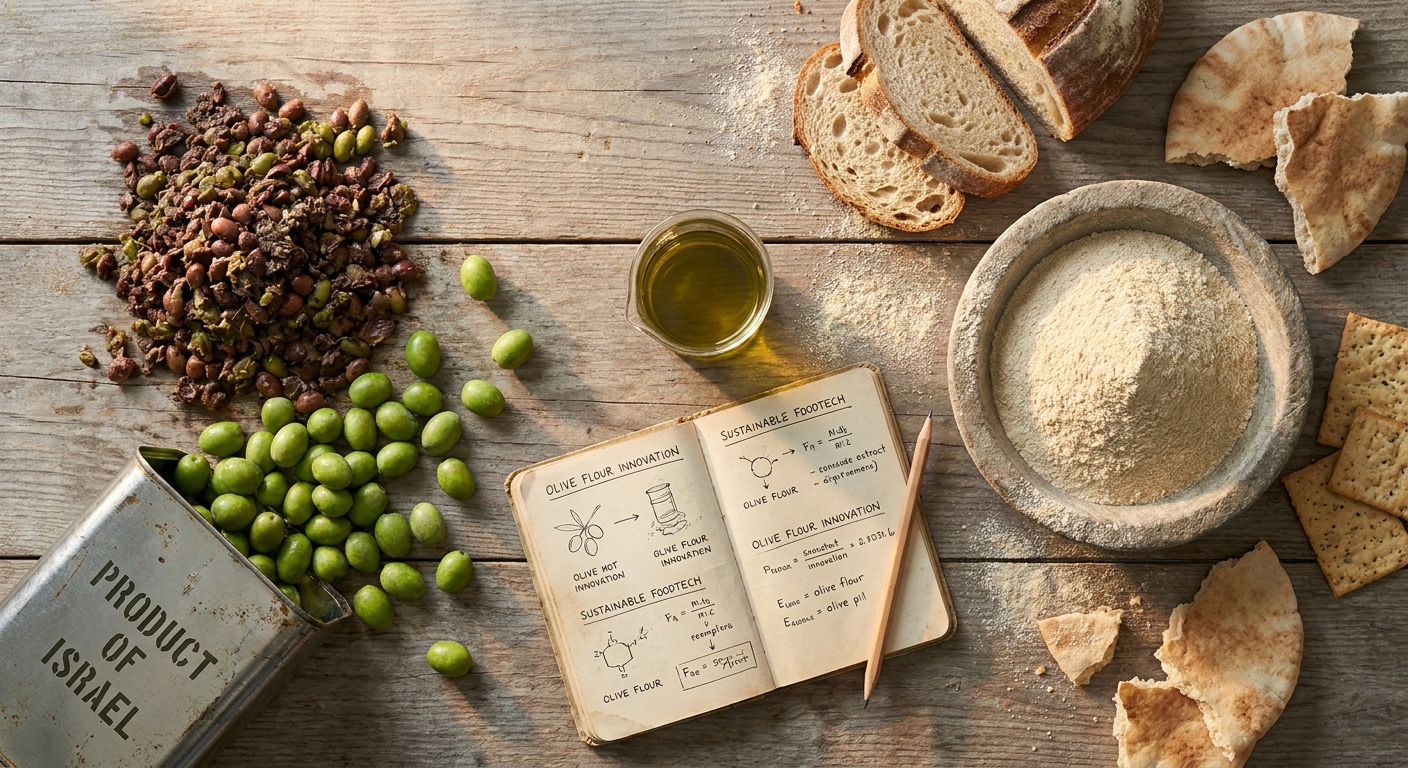
If you try to buy products that line up with your values, you already know how tiring it can be. One package says “natural.” Another says “sustainable.” A third waves a flag and hopes you stop asking questions. If you care about Israeli products, your health, and food waste all at once, it can feel hard to sort real progress from smart marketing. That is why this new Israeli olive waste flour superfood story matters. It is not just another wellness buzzword. Foodtech teams connected to Galilee FoodTech Labs are helping turn the leftover pulp from olive oil production into a useful, fiber-rich flour that can go into everyday foods. Instead of tossing olive byproducts aside, the idea is to give them a second life in breads, crackers, pasta, and baking mixes. That is practical innovation. It is rooted in a food Israelis and Mediterranean cooks already know well, and it solves a real waste problem while offering real nutritional upside.
⚡ In a Hurry? Key Takeaways
- Israeli olive waste flour superfood products use leftover olive material from oil production to create fiber-rich ingredients for baking and packaged foods.
- If you want to try it, start by using it as part of a flour blend in breads, muffins, crackers, or savory doughs rather than replacing regular flour completely.
- It is promising for wellness and sustainability, but shoppers should still check ingredient lists, fiber content, and how the product is processed before calling it a miracle food.
What exactly is olive waste flour?
Let’s translate the science into normal kitchen language.
When olives are pressed for oil, a lot is left behind. That leftover material can include pulp, skins, and pits. For years, much of it was treated as low-value waste or used in limited ways. Israeli food innovators are now working on better options. One of the smartest is drying, processing, and refining parts of that leftover material into a functional flour or flour-like ingredient.
That means something once discarded can become part of food again. Not in a gimmicky way. In a practical way.
Why people are calling it a superfood
The “superfood” label gets thrown around too easily, so let’s be careful here. Olive-based flour ingredients can stand out because they may offer more fiber and plant compounds than standard refined flour. Depending on how they are processed, they may also carry some of the nutritional benefits people already associate with olives and the Mediterranean diet.
That does not mean one muffin turns you into a wellness icon. It means this ingredient could help make staple foods a bit smarter.
Why this matters in Israel, and beyond
Israel already sits at the meeting point of agriculture, food science, and water-smart farming. Olives are deeply tied to the region’s food culture, history, and economy. So this is not a random lab experiment. It builds on something local and familiar.
Galilee FoodTech Labs has become one of the places where that kind of innovation gets pushed forward. The bigger idea is simple. Take a food system problem, like waste from olive oil production, and turn it into a useful product that people might actually buy and eat.
That is the part worth paying attention to. Plenty of green ideas sound nice on paper. Fewer make it into your pantry.
The real benefit for shoppers
Most people are not looking for a dramatic food revolution. They just want to buy better bread, better snacks, or better baking ingredients without needing a chemistry degree.
This is where Israeli olive waste flour superfood products could have real value.
1. It cuts food waste
Olive oil production creates a lot of leftovers. Using those leftovers for food ingredients can reduce waste and get more value out of each harvest.
2. It can raise fiber content
Many modern diets are low in fiber. If this ingredient is used well, it can help boost fiber in everyday foods that people already eat.
3. It fits Mediterranean cooking naturally
This is not some strange imported trend trying to force its way into local cooking. Olives already belong in the flavor world of pita, flatbreads, crackers, savory pastries, and rustic baking.
4. It gives values-driven buyers something concrete
If you want to support Israeli innovation but do not want to fall for empty “eco” branding, this kind of product gives you a more practical story. You can ask clear questions. Does it reduce waste? Does it improve nutrition? Is it actually usable in real food?
What it might taste like, and how to use it
This is the part people always want to know. Fine. But will it ruin my banana bread?
Probably not, if it is used the right way.
Olive waste flour is usually better thought of as an ingredient booster rather than a full one-for-one replacement for wheat flour. Depending on the product, it may bring an earthy, slightly bitter, or savory note. That can work beautifully in crackers, herb breads, pizza dough, and seeded rolls. In sweeter bakes, it may need balancing with other flours and flavors.
Best beginner uses
Start small. Try replacing a modest portion of your usual flour blend. Think along these lines:
- Crackers and crispbreads
- Savory muffins
- Rustic bread loaves
- Pasta blends
- Flatbreads with za’atar or rosemary
If a packaged product already includes it, that may be the easiest entry point. Let food developers do the balancing first.
How to tell if it is real innovation or just a nice label
This is where your shopper radar matters.
Not every product made from upcycled ingredients is automatically healthy. Not every sustainable-sounding package deserves applause. Some products can still be ultra-processed, overloaded with salt, or padded with tiny amounts of the featured ingredient just for marketing.
Check these three things
Ingredient position. If the olive flour is listed near the end, there may not be much of it.
Fiber numbers. If the package talks endlessly about wellness but the fiber content is barely improved, that is a clue.
Overall food quality. A high-fiber cracker loaded with junk is still junk.
That is the good news here. This trend gives buyers a simple test. You do not have to guess. Read the label.
What makes the Israeli angle important
For many readers, the interest here is not just nutrition. It is also about wanting to support the best side of Israeli creativity and production. That can feel complicated right now. Understandably so.
But stories like this offer a grounded way to look at the issue. Instead of abstract slogans, you can focus on a real product solving a real problem. Waste is reduced. Farmers and food producers may gain more value from the same crop. Consumers get foods with a potentially better nutrition profile.
That is a far more useful conversation than arguing over branding alone.
What to watch next
The biggest question is scale. Can these olive flour ingredients move beyond pilot programs and specialty shelves? Can they be made consistently, safely, affordably, and in forms that mainstream food companies want to use?
That is where the future of this idea will be decided.
If Israeli startups and food labs can help make olive byproducts easy to use in standard food manufacturing, this could spread well beyond boutique health stores. You could end up seeing it in supermarket breads, snack lines, gluten-conscious blends, and fortified staples.
That would be the real win. Not just a clever invention, but a normal product people use every week.
At a Glance: Comparison
| Feature/Aspect | Details | Verdict |
|---|---|---|
| Nutrition | Often promoted for higher fiber and useful plant compounds compared with standard refined flour, though exact benefits depend on processing and formulation. | Promising, but check the label instead of trusting the hype. |
| Sustainability | Uses byproducts from olive oil production that might otherwise be underused or wasted. | Strong point. This is the clearest reason to pay attention. |
| Kitchen Use | Best as part of a flour blend for breads, crackers, savory bakes, and some packaged foods rather than a total replacement for regular flour. | Very usable if you start small and match it to the right recipes. |
Conclusion
This is why the Israeli olive waste flour superfood story deserves more than a quick headline. It takes a hot-button topic, Israeli food and products, and grounds it in something practical and positive. Leftovers from olive oil production are being turned into a fiber-rich flour people can actually bake with and food companies can actually use. That connects Israeli foodtech, Mediterranean cooking, and the global push to reduce waste in a way that makes sense for everyday shoppers. If you want to support innovation that feels healthier, smarter, and genuinely future-focused, this is the kind of pantry-level progress worth watching. Not because it is flashy. Because it is useful.