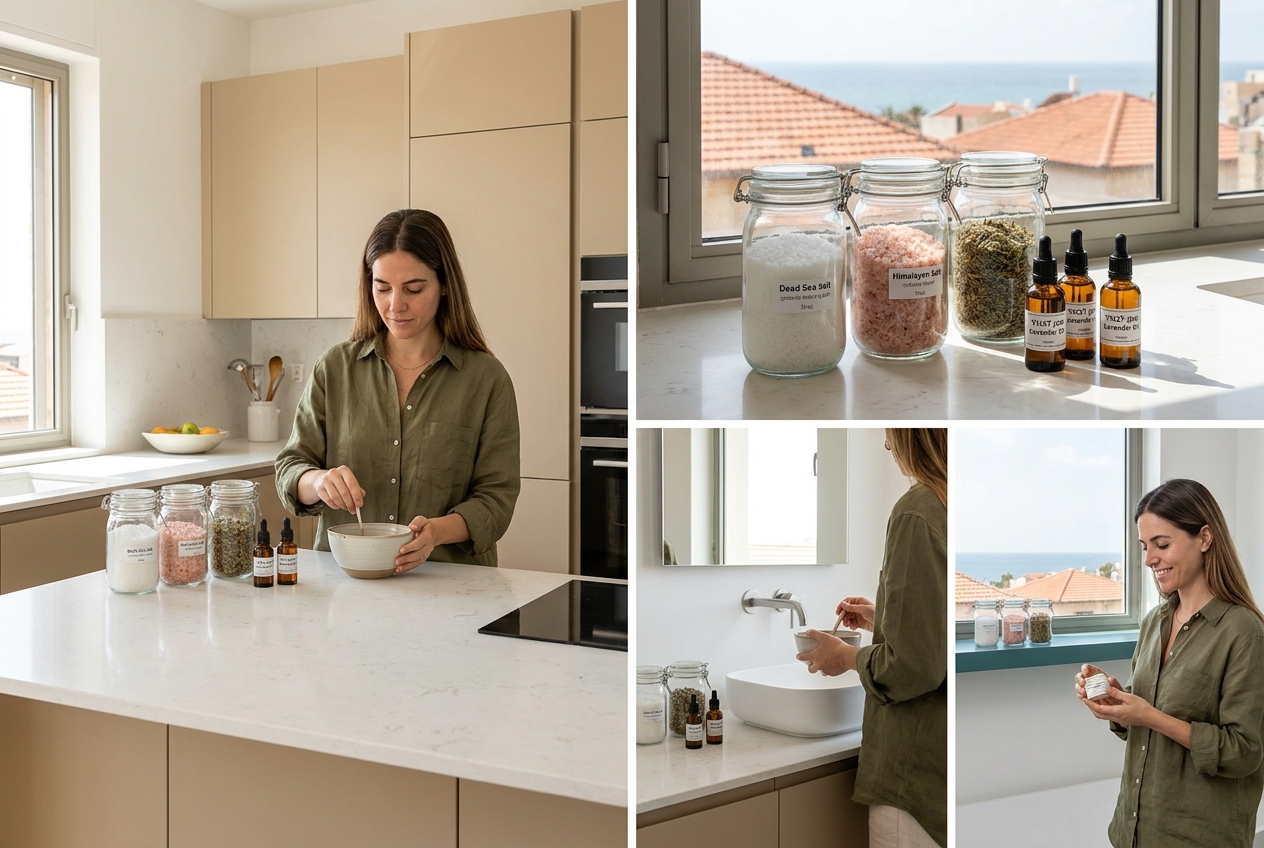
You are not imagining it. More Israelis really are side-eyeing the ingredient lists on toothpaste, deodorant, soap and face cream, then heading to the kitchen to see if they can make something simpler. The appeal is obvious. Fewer mystery words. More control. Maybe even lower cost. But this trend comes with a real headache. A “natural” label does not always mean safe, and a homemade recipe copied from social media can irritate skin fast if the oils, acids or preservatives are wrong. That leaves many people stuck in the middle. They do not fully trust mass-market products, but they also do not want to play chemist with their face. The good news is you do not have to choose between blind trust and random DIY. There is a middle path. You can learn a few safety rules, start with one very simple product, and know which Israeli-made options already do a good job blending natural ingredients with proper testing.
⚡ In a Hurry? Key Takeaways
- Israeli DIY natural cosmetics can be a smart option, but only for simple products and with basic hygiene and patch-testing.
- Start with easy, low-risk items like body scrubs or oil-based balms, not sunscreen, toothpaste with actives, or strong facial acids.
- If you want “natural” without guesswork, look for Israeli brands that use simpler formulas but still package, preserve and test products properly.
Why this beauty shift is happening in Israel
Part of it is global. People everywhere are reading labels more closely. But in Israel, this shift has its own flavor. There is a strong culture of home remedies, herbal traditions, Dead Sea minerals, olive oil soaps and small local makers. Add social media to that mix, and suddenly everyone knows someone making lip balm, deodorant paste or oat soap at home.
There is also growing suspicion around long ingredient lists. Sometimes that suspicion is justified. Fragrance blends can trigger irritation. Harsh cleansers can dry out skin. Some cheap products are full of fillers that do not add much value. Still, fear can go too far. A long label is not automatically bad, and a short one is not automatically good.
That is the first rule worth remembering. Natural is a style of formulation. It is not a safety guarantee.
What you can safely make at home, and what you really should not
Good beginner DIY products
If you are curious about Israeli DIY natural cosmetics, start with products that are simple, rinse off easily, or do not need a complex preservation system.
Safer beginner options include:
- Body scrub made from oil and sugar or salt
- Basic body oil with one or two skin-friendly oils
- Lip balm using wax and oil
- Bath soak with Dead Sea salt and plain oats
These are forgiving. They are also easier to make in small batches, which matters because homemade products spoil faster than store-bought ones.
High-risk DIY products
Some items sound easy but are not. Leave these to professionals unless you really know formulation science:
- Sunscreen
- Preserved lotions that contain water
- Eye-area creams
- Toothpaste with active ingredients
- Strong exfoliants using acids or enzymes
- Essential-oil-heavy deodorants for sensitive skin
Why the warning? Water-based products can grow bacteria and mold if they are not preserved correctly. Toothpaste and sunscreen need specific active levels to work. And essential oils, while “natural,” are one of the biggest causes of DIY skin irritation.
The biggest myth in this trend: if it is natural, it must be gentle
This one trips people up all the time. Lemon juice is natural. It can also burn skin. Baking soda is natural. It can disrupt your skin barrier. Tea tree oil is natural. It can irritate or cause allergy if overused.
Skin does not care whether an ingredient comes from a lab or a plant. It reacts to concentration, pH, freshness, contamination and your own sensitivity.
So when you see viral recipes with lots of citrus, undiluted essential oils, or aggressive scrubs, treat them like gossip. Interesting, maybe. Reliable, not necessarily.
The smart middle ground: buy better, DIY less
For many people, the best answer is not full homemade beauty. It is selective DIY.
Make one or two simple products at home if you enjoy it. Then buy the harder stuff from brands that already bridge the gap between natural ingredients and real testing. That means looking for products with:
- Clear ingredient labels
- Proper sealed packaging
- Reasonable shelf life
- No wild health claims
- Good reviews from people with similar skin needs
Israeli skincare is in a strong position here. Local brands often use ingredients people already trust, like Dead Sea minerals, olive oil, herbal extracts and mud, but package them in a safer, more stable way than most kitchen recipes ever could.
Which Israeli-style ingredients are actually useful?
Dead Sea salt and mud
These can be great for body care, especially for soaking or occasional masks. They are mineral-rich and widely loved. But they are not magic. If you have very sensitive or broken skin, they can sting.
Olive oil
A solid base for body balms and soaps. It is familiar, simple and easy to work with. For acne-prone facial skin, though, it is not always the best choice.
Calendula, chamomile and aloe
These are popular for calming formulas. They can be helpful, but again, not for everyone. Plant allergies are real.
Essential oils
Use extreme caution. Lavender, peppermint, tea tree and citrus oils are common in DIY recipes, but more is not better. A product that smells “clean” can still leave skin angry and red.
Safety rules that matter more than the recipe itself
If you remember nothing else, remember this part.
1. Patch test everything
Put a small amount on the inner arm and wait 24 to 48 hours. No guessing.
2. Make tiny batches
Homemade products do not have the preservation systems of commercial ones. Small batches reduce waste and risk.
3. Keep tools and jars clean
Wash, dry and sanitize containers before filling them. Dirty jars ruin good intentions fast.
4. Avoid water unless you know how to preserve it
Oil-based products are easier for beginners. Water invites microbial growth.
5. Label the date
If you made it three weeks ago and it smells odd, changed color or separated strangely, toss it.
6. Do not experiment on damaged skin
If you have eczema, active acne, rosacea or a rash, simple and tested is better than homemade and hopeful.
One easy starter recipe that is actually beginner-friendly
Simple Dead Sea body scrub
This is a good first step because it is easy, cheap and low drama.
You need:
- 1/2 cup fine Dead Sea salt or sugar
- 1/4 cup jojoba oil or light olive oil
- 1 teaspoon honey, optional
- 2 drops lavender essential oil, optional and only if your skin tolerates it
How to make it:
- Mix everything in a clean, dry bowl.
- Spoon into a small sanitized jar.
- Use on damp body skin, not the face.
- Rinse well and pat dry.
Why this works: it exfoliates and softens skin without pretending to be medicine.
What not to do: do not use on broken skin, right after shaving, or if you have very reactive skin.
What to buy instead of making yourself
If you are tempted to make everything from scratch, slow down. Some products are simply better bought from professionals.
- Facial cleanser: needs the right pH and surfactants
- Deodorant for sensitive underarms: homemade versions often rely on baking soda, which can be harsh
- Toothpaste: this one is tricky because cleaning ability, abrasiveness and fluoride questions matter
- Moisturizer with water: preservation is the issue
This is where trusted Israeli products can make sense. You still get the local ingredient story and a more conscious formula, but someone else handles the chemistry, stability and safety testing.
How to shop smarter if you want “cleaner” skincare without the panic
The most helpful habit is reading labels with calm, not fear.
Look for products that match your actual goal. If your skin is dry, focus on moisturizers and gentle cleansers. If you are trying to avoid strong fragrance, look for fragrance-free or low-fragrance options. If you like the idea of local ingredients, fine. Just do not let the marketing do all the thinking for you.
A few practical green flags:
- The brand explains what the product is for in plain language
- The ingredient list is visible
- The packaging protects the formula from light or contamination
- The claims are realistic
And a few red flags:
- “Chemical-free” claims
- Promises to cure every skin issue
- No shelf-life guidance
- DIY sellers who cannot explain storage or ingredients clearly
Where IsraSale fits into this trend
This is the part many shoppers want. One place where they can either buy a ready-made Israeli formula or pick up quality raw materials for a simple experiment at home. That is why this trend matters beyond social buzz. People want less confusion.
If you are browsing IsraSale, the smartest approach is to split your basket in two. Put your higher-risk essentials in one mental category. Think deodorant, facial care, toothpaste, sunscreen. Buy those from trusted Israeli or Holy Land-style brands with proper formulation. Then, if you enjoy DIY, add simple raw materials for low-risk experiments like a scrub, balm or bath soak.
At a Glance: Comparison
| Feature/Aspect | Details | Verdict |
|---|---|---|
| Homemade simple body care | Scrubs, bath salts and balms are easy to make in small batches with low contamination risk if kept water-free. | Good place to start |
| Homemade functional products | Toothpaste, deodorant, facial lotions and sunscreen need proper formulation, pH control and preservation. | Better to buy |
| Israeli natural-meets-tested brands | Often combine familiar local ingredients like Dead Sea minerals or herbal extracts with safer packaging and more stable formulas. | Best middle-ground option |
Conclusion
The boom in Israeli DIY natural cosmetics makes sense. People want fewer mystery ingredients, more control and products that feel closer to home. But there is a big difference between mindful and reckless. You do not need to fear every commercial product, and you do not need to smear random kitchen mixtures on your skin to be a conscious buyer. Start small. Follow basic safety rules. Make only the easy stuff yourself. Buy the trickier products from Israeli brands that already balance natural ingredients with real-world testing. That way, you get the best of both worlds. Less anxiety, fewer bad experiments, and a routine that feels smarter. For readers trying to cut through the noise filling Israeli media and social feeds right now, that is the real win. And if you want one place to explore both trusted Holy Land formulas and beginner-friendly DIY ingredients, IsraSale is well positioned to help you do it without the guesswork.