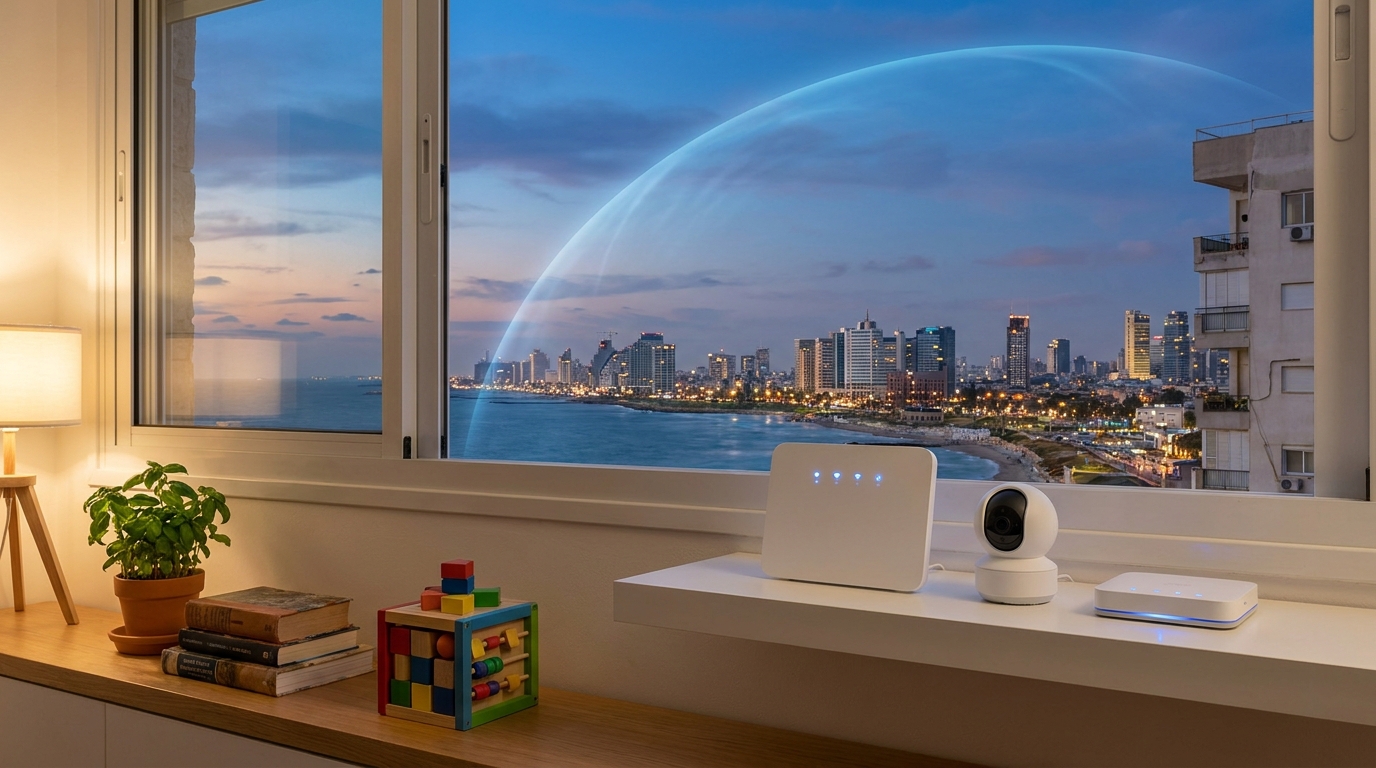
You are not imagining the disconnect. One minute the news is talking about Rafael’s Iron Beam laser, Anduril opening up in Israel, and giant defense contracts. The next minute you are just trying to buy a router that does not get hacked, a camera that does not spy on your family, or a smart doorbell that actually feels smart. It can all sound far away and a little unsettling. But some of the same Israeli defense tech ideas behind spotting threats fast, filtering bad signals, and protecting networks are quietly showing up in everyday products. That matters because the real win for regular people is not owning military gear. It is getting better home Wi-Fi security, smarter cameras that spot the difference between a person and background motion, and privacy tools that block problems before they spread. If you know what to look for, these headlines stop being abstract and start becoming a practical shopping guide.
⚡ In a Hurry? Key Takeaways
- Israeli defense tech consumer products are usually not weapons for civilians. They are routers, cameras, sensors, and privacy tools built with stronger threat detection and faster response.
- When shopping, look for features like local AI processing, automatic security updates, encrypted storage, multi-factor login, and clear privacy controls.
- The safest device is not always the fanciest one. A simpler product with regular updates and a good security track record is often the better buy.
Why defense headlines matter when you are buying home tech
Defense research often solves the same basic problem you have at home. How do you spot trouble early, avoid false alarms, and react before a small issue becomes a big one?
That is the thread connecting a laser defense system like Rafael’s Iron Beam to a decent home router. They live in very different worlds, yes. But both depend on fast detection, smart filtering, reliable software, and systems that keep working under stress.
Anduril’s move into Israel matters here too. The company is known for sensor-heavy, software-first security systems. When firms like that set up deeper ties with Israel’s defense and startup world, the spillover often reaches civilian products later. Not as sci-fi gadgets, but as better sensors, better analytics, and better cybersecurity habits in products normal people can actually buy.
What “Israeli defense tech consumer products” really means
Let’s make this plain. You are probably not going to see “battle-tested laser shield” stamped on a router box at your local store.
What you will see is technology shaped by that environment. Things like:
- Smarter threat detection in home networks
- Cameras that identify meaningful motion instead of every leaf blowing past
- Anti-jamming and signal stability ideas feeding into wireless gear
- Secure chips and encrypted communications in smart devices
- Software that gets frequent updates because security is treated as an ongoing job
That is the consumer side of the story. Israeli defense tech consumer products are really about security thinking moving into family-friendly hardware and apps.
From missile tracking to motion detection
The same mindset, scaled way down
Iron Beam is designed to detect and respond to fast-moving threats. Your home camera is not doing anything that dramatic, but the basic challenge is similar. It has to decide what matters and what does not.
A cheap camera sees everything as a possible threat. Cat. Car light. Rain. Tree shadow. Then your phone explodes with useless alerts and you stop paying attention.
A better camera uses stronger onboard processing and cleaner detection models. It can tell the difference between a person, a package, a pet, and random background noise. That is where high-end security R&D often trickles down first. Not in flashy marketing. In fewer false alerts and faster useful alerts.
Why this matters for families
If your security gear cries wolf all day, it is not really protecting you. It is just annoying you. The best systems save your attention for the moments that count.
Where you are most likely to see the benefits at home
1. Wi-Fi routers and network hubs
This is the least exciting device in your house, and maybe the most important. A secure router can stop a lot of bad stuff before it reaches your laptop, TV, baby monitor, or doorbell.
Look for routers or mesh systems with:
- Automatic firmware updates
- Threat blocking for known malicious sites
- Guest network support
- Separate networks for smart home devices
- App alerts for new devices joining your network
If a brand talks clearly about network monitoring, anomaly detection, and device isolation, that is often a sign of serious security DNA.
2. Security cameras and video doorbells
This is where Israeli know-how often feels most visible. Strong imaging, edge processing, fast alerts, and lower false alarms are all areas where security-first engineering helps.
The big thing to check is where the video gets processed. If a camera can do more on the device itself, instead of sending every clip to the cloud, that is usually better for privacy and speed.
3. Privacy-first smart home gear
Some companies now sell sensors, locks, and hubs with a much stronger security posture than the average cheap gadget marketplace special. They may not always shout about defense roots, but the influence is there in the design choices.
That means tighter permissions, better encryption, and fewer weird data grabs.
What Anduril’s Israel push could mean for everyday buyers
Big defense companies entering Israel are not just chasing contracts. They are tapping into a dense network of engineers, sensor experts, AI talent, and cybersecurity people.
For consumers, that can mean three useful things over time:
- Better software-defined security products
- More civilian spin-offs from sensing and network defense tools
- More pressure on mainstream brands to improve security basics
This is not a promise that your next doorbell camera will suddenly become amazing. But it does mean the pipeline of ideas is getting stronger, especially in detection, autonomy, and secure communications.
How to shop smarter this month
Read the security page before the product page
Most people start with image quality, range, or battery life. Fair enough. But if you are buying connected devices, start with the company’s security and privacy page.
If it is vague, that tells you something. If it clearly explains updates, encryption, data storage, and account protection, that tells you something too.
Look for these words, and these missing words
Good signs:
- End-to-end encryption
- Local storage or local processing
- Two-factor authentication
- Regular security patches
- Responsible disclosure or bug bounty program
Bad signs:
- No update policy
- No mention of encryption
- Cloud-only everything
- Confusing privacy settings
- Very cheap hardware with no known support history
Check who owns the data
This one gets missed all the time. Ask a simple question. If this device records my home, my family, or my routine, who controls that information?
If the answer is murky, move on.
What not to fall for
There is a growing temptation to slap “military-grade” on anything with a battery and an app. Be skeptical.
That phrase is often more marketing than meaning. What you want is not vague toughness. You want clear consumer protections.
Ask practical questions:
- How long will this device get updates?
- Can I use it without sharing more data than necessary?
- Does it work well if my internet goes down?
- Can I manage separate access for family members?
- Is there a history of security problems, and did the company fix them quickly?
Drones are part of this story too
If your concern is not just data leaks but actual airspace security around homes, campuses, events, or worksites, it is worth reading From Warzone to Workbench: The New Israeli Drone Shields Built For Everyday Security. It does a good job showing how anti-drone ideas are moving out of conflict zones and into real civilian security planning.
That matters because cheap drones can expose the weak spots in regular security setups. Gates and cameras help, but they do not fully answer an aerial problem. Israeli firms have been pushing hard on that gap.
The practical home upgrade path
If your budget is tight
Start with the router. Seriously. A secure, well-supported router does more for your overall safety than adding another random smart gadget.
After that, add one camera with strong privacy controls rather than three cheap cameras with weak security.
If you already own a bunch of smart devices
Segment them. Put them on a guest or IoT network if your router allows it. Change default passwords. Turn on two-factor authentication. Update everything.
None of this is glamorous. It works.
If you are shopping for new devices now
Favor brands that talk about software support like it is part of the product, not an afterthought. In security, software support is the product.
At a Glance: Comparison
| Feature/Aspect | Details | Verdict |
|---|---|---|
| Router security | Automatic updates, device isolation, threat blocking, clear support policy | Best first upgrade for most homes |
| Smart cameras | Local AI detection, encrypted storage, fewer false alerts, strong app permissions | Worth paying more for privacy and accuracy |
| “Military-grade” branding | Often vague marketing without clear update or privacy promises | Treat with caution. Check the actual security details |
Conclusion
The headline version of this story is about lasers, defense deals, and geopolitical muscle. The useful version is much simpler. Some of the world’s toughest security problems are helping shape better everyday tech, and that gives regular buyers a chance to make smarter choices. If you focus on routers, cameras, and privacy-first devices with clear update policies and strong data protection, you can actually benefit from this wave of Israeli defense tech consumer products without getting lost in the hype. That is the real value here. Not doomscrolling through heavy news, but turning world-class security know-how into practical upgrades for your home, your family, and the gadgets you bring through the front door.