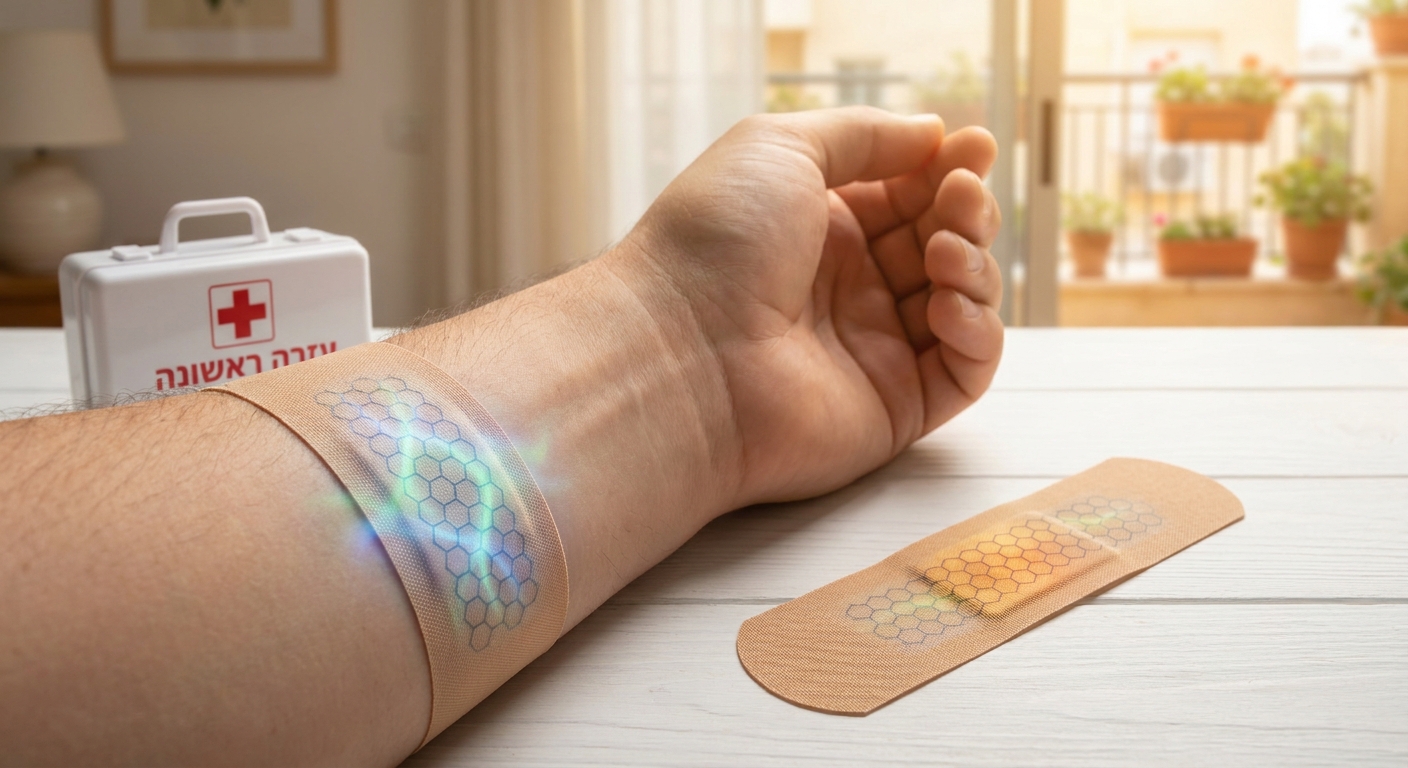
You know the routine. Wash the cut. Add ointment. Put on a bandage. Then wait and wonder if it is healing normally or quietly turning into a problem. That guessing game is stressful, especially when urgent care bills are high and life is already busy enough. A new wave of Israeli smart bandage infection detection tools aims to fix that by giving wounds a way to “talk” sooner. Some of these dressings change color when the chemistry around a wound shifts toward infection or inflammation. Others use tiny sensors to track heat, moisture, pH, or bacteria-related markers. The idea started getting serious attention in Israeli research labs and field medicine settings, where fast decisions matter. Now the same basic concept is moving closer to home first-aid kits. For parents, travelers, older adults, and people with diabetes, that could mean fewer bad surprises and earlier treatment when a wound starts heading in the wrong direction.
⚡ In a Hurry? Key Takeaways
- Israeli smart bandages can flag possible infection early by changing color or using tiny built-in sensors.
- For home use, they are best seen as an early warning tool, not a replacement for cleaning wounds properly or getting medical care.
- They may be especially useful for kids, travelers, older adults, and anyone with diabetes or slow-healing skin.
Why regular bandages leave you guessing
Most bandages do one job well. They cover and protect. What they do not do is tell you what is happening underneath.
That matters because infection often starts quietly. You may not feel much at first. Redness can be easy to dismiss. Warmth, swelling, extra fluid, or a strange smell may show up later. By then, what could have been a quick call to a doctor might become antibiotics, a more painful wound, or a trip to urgent care.
Traditional first-aid gear has barely changed in years. Meanwhile, more care is happening at home. Families are treating playground scrapes, kitchen cuts, blisters from travel, and post-procedure wounds without much feedback beyond “keep an eye on it.”
What makes an Israeli smart bandage “smart”?
The short answer is this. It senses something about the wound instead of just covering it.
Color-change bandages
These use chemistry that reacts to changes linked to infection or inflammation. A common target is pH. Healthy skin and healing wounds tend to stay within certain ranges. When bacteria grow or inflammation rises, the wound environment can shift. A bandage designed around that chemistry may change color to warn you.
That makes the concept easy for everyday people to understand. If the patch changes from one color to another, it is time to take a closer look.
Sensor-based bandages
These go a step further. Tiny printed or flexible sensors can track things like temperature, moisture, acidity, or specific bacterial markers. Some versions may eventually connect to a phone app or reader. Others are built for clinics, military medicine, or remote monitoring first, then may trickle down into consumer products.
This is where Israeli researchers and startups have drawn interest. Israel has a strong mix of defense medicine, biomedical engineering, and fast-moving startup culture. That combination is a good fit for wound care tools that need to be small, rugged, and simple to use under pressure.
Why this matters outside the lab
“Smart bandage” can sound futuristic, but the real benefit is very practical. It reduces guesswork.
If you are a parent, you want to know whether that scraped knee just looks angry or is actually becoming infected. If you travel, you want more confidence managing a blister, cut, or burn in a hotel room or on the road. If you care for an older adult, you know fragile skin can turn into a bigger issue fast. And if you have diabetes, catching wound trouble early is not just convenient. It is important.
For people with slower healing, poor circulation, or reduced sensation, waiting until a wound “feels worse” is not always a safe plan. A bandage that gives an earlier warning could buy valuable time.
What “infection detection” really means
This part is important. These bandages do not magically diagnose everything.
They are better thought of as an alert system. They can suggest that the wound environment is changing in a way that deserves attention. That could mean infection. It could also mean irritation, inflammation, excess moisture, or a dressing that needs changing.
So the smart move is to use them as one piece of the puzzle, along with common-sense wound checks:
- Increasing redness, especially if it spreads
- Heat or swelling around the wound
- Pus or cloudy drainage
- Bad odor
- Fever or chills
- Pain that is getting worse, not better
How close are these bandages to your medicine cabinet?
Some versions are still in research or pilot stages. Others are closer to real-world use, especially the simpler color-change designs. In general, the easier the signal is to read and the lower the cost, the faster it can move from hospital or field settings into home care.
That is good news, because consumer first-aid products need to be simple. People are not going to use a wound gadget that requires ten steps, calibration, and a training course.
The sweet spot is pretty clear. A bandage should be affordable, easy to apply, easy to read, and useful without creating panic every time a scrape looks a little pink.
Who should care most about this now?
Parents
Kids get cuts constantly. Most are minor, but they are also experts at hiding pain until bedtime. A smart bandage could add peace of mind during the first day or two.
Travelers
Minor wounds feel bigger when you are far from your regular doctor. A bandage that can hint at trouble early is a handy upgrade for a travel kit.
People with diabetes
This is one of the biggest groups to watch. Even small skin injuries can become serious if healing is slow or sensation is reduced. Early warning matters.
Older adults and caregivers
Skin tears, pressure spots, and slow-healing wounds can escalate quickly. Better monitoring at home can help families act faster.
What to look for if these hit store shelves
If you see Israeli smart bandage infection detection products or similar wound patches becoming available, focus on the basics first.
- Clear instructions
- Easy-to-read color or app alerts
- Good adhesive that does not damage skin
- A realistic wear time
- Skin-safe materials
- Pricing that makes sense for regular home use
Also check whether the product is meant for minor cuts, chronic wounds, post-surgical care, or clinical monitoring. Those are not the same thing.
What you should still do with any wound
Even the smartest bandage does not replace good first aid.
- Wash your hands.
- Clean the wound gently with water.
- Stop bleeding with light pressure.
- Use an appropriate dressing.
- Change it as directed.
- Watch for signs of infection.
Get medical help sooner for deep wounds, bites, punctures, burns, wounds that will not stop bleeding, or anything involving a diabetic foot. And if redness is spreading, fever starts, or drainage looks infected, do not wait on the bandage to make the call for you.
At a Glance: Comparison
| Feature/Aspect | Details | Verdict |
|---|---|---|
| Color-change detection | Uses wound chemistry such as pH shifts to show a visible warning. | Best bet for simple, affordable home use. |
| Tiny sensor systems | Can track heat, moisture, inflammation, or bacterial markers, sometimes with digital readouts. | More powerful, but likely pricier and slower to become common in drugstores. |
| Real-world value | Helps reduce guesswork for parents, travelers, caregivers, and people with slow-healing wounds. | Promising upgrade, but still not a substitute for proper wound care or medical advice. |
Conclusion
Most of us are still treating wounds with supplies our grandparents would recognize, and that feels a little outdated when so much care now happens at home. Israeli smart bandages that spot early signs of infection or inflammation offer a practical step forward, not a sci-fi gimmick. They will not replace doctors, but they could help people make better decisions sooner. That is a big deal when time, money, and peace of mind are all in short supply. For parents watching a child’s scrape, travelers patching up on the road, or anyone managing fragile skin or diabetes, this is the kind of health tech that actually makes everyday life easier and safer.