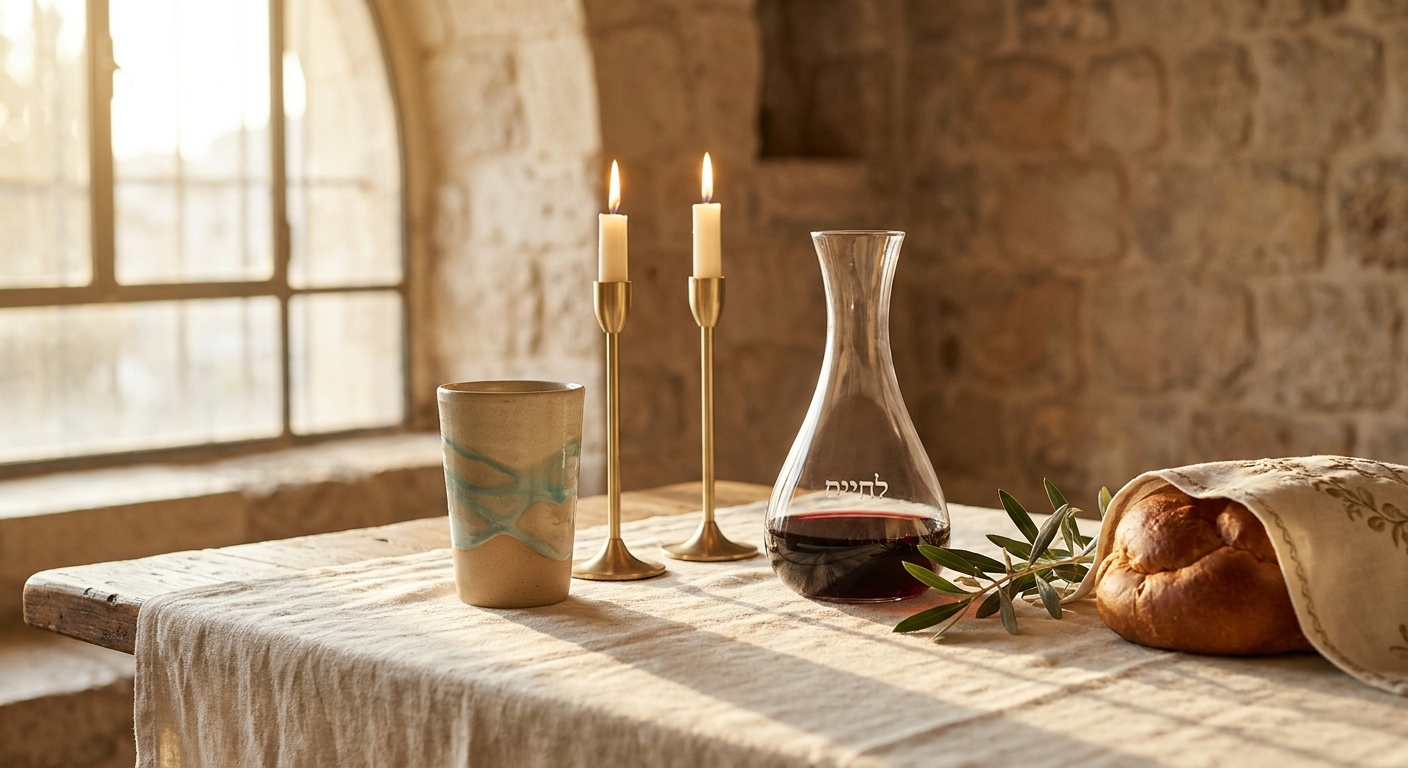
You know the feeling. You want your Shabbat table to look calm, beautiful and a little more intentional, but the minute you start shopping online, everything blurs together. One kiddush cup looks like a factory copy of the next. Another is so ornate it feels frozen in another era. Then there are the pieces with luxury prices and almost no clue where they were actually made. If you have been trying to find a modern Israeli kiddush set made in Israel, by a real artist and not a vague reseller, your frustration is completely fair. The good news is that a quieter shift is happening. Small Jerusalem studios, ceramics workshops in Tel Aviv, and metal artists across Israel are making Judaica that feels current without losing its soul. These new artisan Kiddush sets and candleholders are not just prettier objects. They are helping redefine what a Shabbat table can look and feel like.
⚡ In a Hurry? Key Takeaways
- A modern Israeli kiddush set made in Israel is easier to spot when the maker clearly names the studio, materials, city and process.
- Start with a small set, usually a kiddush cup plus tray or matching candleholders, and look for handmade details instead of perfect factory symmetry.
- Buying from independent Israeli artists often gives you better story, quality and meaning than generic Judaica marketplaces, even if the price is a bit higher.
Why these new Kiddush sets feel different
For years, Judaica shopping tended to split into three lanes. Very traditional. Very commercial. Very expensive. That left a lot of people in the middle.
The newer Israeli artisan scene is filling that gap. You are seeing brushed brass instead of shiny plated metal. Hand-thrown ceramic cups instead of machine-stamped goblets. Soft stoneware glazes, olive wood accents, clean Hebrew lettering, and tray designs that look at home next to linen napkins and simple white plates.
In other words, these pieces do not scream for attention. They settle into the table. That is part of the appeal.
Many buyers are not looking for a museum piece. They want something that feels special every Friday night, looks modern in a real home, and still carries the weight of tradition. Israeli artists are getting that mix right.
What “made in Israel” should actually mean
This is where shoppers get tripped up. Lots of listings use Israeli symbols, Hebrew words or Jerusalem imagery without clearly saying where the item was produced.
Good signs to look for
A real made-in-Israel listing usually tells you:
- The artist or studio name
- The city, such as Jerusalem, Tel Aviv, Safed or Jaffa
- The material, like ceramic, sterling silver, brass or olive wood
- How it is made, such as hand-thrown, cast, hammered or glazed by hand
- That slight variations are normal because each piece is handmade
Warning signs to watch
Be cautious if a seller uses broad phrases like “Israeli style,” “Jerusalem inspired,” or “designed for Jewish homes” without saying where production happens. Also be wary of product catalogs where every item looks unrelated but shares the same generic description.
If you cannot find the artist’s name, workshop location or any process details, that is a clue. A real studio usually wants you to know who made your piece.
The design shift happening in Jerusalem studios
Jerusalem has always produced religious art, but a younger wave of makers is changing the visual language. Instead of covering every surface with filigree, pomegranates and heavy ornament, many are using restraint.
That can mean a simple ceramic cup with a matte glaze and one line of Hebrew. Or a wine tray cut from stone or wood with a subtle groove that keeps spills contained. Or candleholders with a sculptural shape that work just as well on a bookshelf after Shabbat ends.
This matters because design changes behavior. When a ritual object feels natural in your home, you use it more. You leave it out. You notice it. It becomes part of family memory instead of something kept in a cabinet for company.
What materials are showing up now
Ceramic and stoneware
Ceramic is having a real moment in Israeli Judaica. It feels warm, tactile and personal. A ceramic kiddush cup often looks less formal than silver, which can make it more inviting for younger families or people building new traditions.
Brass and mixed metals
Brass brings in a soft glow without the high-polish look that can feel dated. Some artists pair brass with wood or concrete for a more architectural feel.
Olive wood
Olive wood still has emotional pull because it feels tied to the land itself. In newer designs, it is often used sparingly, as a tray insert, base or accent, rather than the whole object.
Glass with cleaner lines
Israeli glass artists are also moving toward simpler forms. Less color overload. More shape, texture and clarity.
How to shop without getting fooled
You do not need to become a Judaica detective, but a few checks help.
Ask three simple questions
- Who made this?
- Where was it made?
- What makes this handmade?
If a seller answers clearly, great. If the reply is vague or sounds copied from a catalog, keep moving.
Look at the photos closely
Handmade items should show some character. Maybe the glaze shifts slightly. Maybe the hammering pattern is not perfectly repeated. Maybe the cup and tray have subtle variation. That is not a flaw. That is often the point.
Read the shipping language
If the item claims to be made in Israel but ships from a random warehouse elsewhere with no mention of the artist, ask why. Sometimes there is a good reason. Sometimes there is not.
Why people are buying these now
Part of it is style. People want a Shabbat table that feels less formal and more alive.
Part of it is emotional. Right now, many Jewish families want a concrete connection to Israel that is warmer and more human than the daily news cycle. A kiddush set made by an artist in Jerusalem or a candleholder shaped by a ceramicist in Tel Aviv offers that connection in a real, quiet way.
You are not just buying a cup. You are supporting a working studio. You are bringing someone’s craft into your home. And every Friday night, that story comes back to the table.
How much should you expect to pay?
This is where expectations matter. Handmade Israeli Judaica is usually not bargain-bin cheap. But it also does not have to hit luxury-gallery territory.
A simple artisan kiddush cup may cost more than a mass-market option because you are paying for small-batch work, local labor and better materials. Matching sets with tray and candleholders naturally cost more. Custom engraving or one-off glaze work will raise the price too.
The smart way to think about it is cost per use. A good kiddush set is not seasonal decor. It can become a weekly object, and maybe one your kids fight over one day. That changes the value equation quite a bit.
Best buying strategy for first-timers
Start with one anchor piece
If you are overwhelmed, do not try to redo the whole table at once. Start with a kiddush cup and tray, or a pair of candleholders. Let that piece set the tone.
Pick modern, not trendy
There is a difference. Trendy can look old fast. Modern usually means clean shapes, honest materials and simple color choices that age well.
Choose something you will actually use
If you have small kids, very delicate glass may not be your best friend. If you host often, look for pieces that clean easily and feel solid in the hand.
What makes an artisan set heirloom-worthy
An heirloom is not just expensive. It is memorable.
The pieces that tend to last in families have a few things in common. They feel good to use. They hold up physically. They have a story. And they reflect a moment in Jewish life without feeling trapped in it.
That is why these new Israeli sets stand out. They often feel rooted but not rigid. Special, but not fussy. That balance gives them staying power.
At a Glance: Comparison
| Feature/Aspect | Details | Verdict |
|---|---|---|
| Authenticity | Best listings name the artist, studio location in Israel, materials and handmade process. | A must-have if you want the real thing. |
| Design Style | New artisan sets use ceramics, brass, glass and wood in cleaner, more contemporary forms. | Best for homes that want tradition without visual clutter. |
| Price vs Value | Usually costs more than mass-produced Judaica, but offers stronger quality, story and long-term meaning. | Worth it if you want a weekly-use piece with staying power. |
Conclusion
If you have been hunting for a modern Israeli kiddush set made in Israel and feeling disappointed by generic listings, you are not imagining the problem. It is hard to sort true craftsmanship from clever marketing. But the encouraging part is that a new generation of Israeli artists is making Judaica that feels grounded, beautiful and genuinely livable. These Kiddush sets and candleholders do more than dress up a table. They give people a hopeful, tangible connection to Israel that goes beyond headlines and politics. They support local makers. They bring a piece of the Holy Land into a weekly ritual. And they offer something rare, objects modern enough for a design blog, but rooted enough to become a family heirloom.