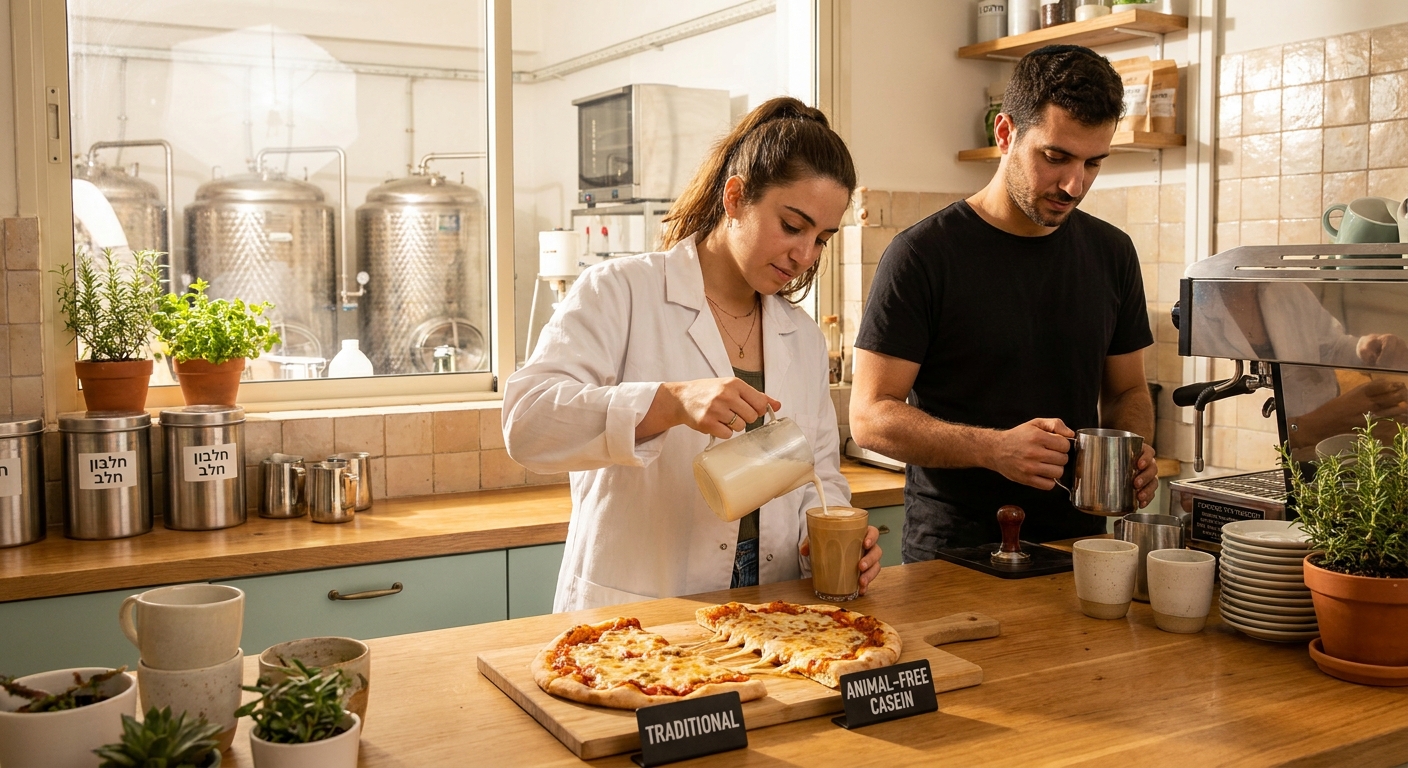
If you have ever stood in the grocery aisle staring at a plant cheese that promised “melty goodness” and then turned into a sad, oily puddle on pizza, you are not alone. The same goes for non-dairy milk in coffee. Some are fine. A few are decent. But if you love the real thing, you can usually tell. That is why this new wave of Israeli animal free casein cheese matters. An Israeli startup has raised fresh funding to scale production of animal-free casein in Israel, and that one protein is the part most alternatives have been missing. Casein is what gives dairy cheese its stretch, bite and melt, and helps milk behave properly in drinks like cappuccinos. So this is not just another “better for you” food headline. It is a real step toward cheese and creamy coffee that taste familiar, without relying on cows. For shoppers in the US and Europe, it also means Israeli food tech may soon show up quietly in products you actually want to buy again.
⚡ In a Hurry? Key Takeaways
- Israeli animal free casein cheese aims to copy the key dairy protein that gives real cheese its melt, stretch and foam-friendly texture.
- Watch ingredient labels and brand announcements over the next few months, because products may appear first as “animal-free dairy protein” or “precision fermented casein.”
- This is not automatically dairy-free for people with milk-protein allergies, even though no cow is involved.
Why people are suddenly paying attention to casein
Most plant-based cheese has had the same problem for years. It can copy the color. It can copy the slice shape. It can even copy the packaging. But it usually cannot copy the part you notice when you bite it, heat it or froth it.
That is because dairy is not just fat and water. It is a protein system. And one of the stars of that system is casein.
Casein is the main protein in milk that helps cheese set, stretch, brown and melt in that familiar way. It is also part of why dairy behaves so well in coffee drinks, creamy sauces and desserts. Without it, brands often have to patch things together with starches, coconut oil, gums and flavor tricks. Sometimes that works. Often it does not.
So what is animal-free casein, in plain English?
Think of it like brewing beer, but instead of making alcohol, a company uses microflora to make a dairy protein. No cow is milked. The protein itself is made through fermentation, then used as an ingredient in food.
The goal is simple. Keep the part people love about dairy, lose much of the animal and environmental baggage tied to conventional production.
If that sounds familiar, it should. We have already seen similar excitement around milk proteins made without cows. If you liked our earlier piece, From Haifa Fermentation Vats to Your Morning Latte: The New Israeli ‘Cow‑Free Milk’ Quietly Rewriting Dairy As We Know It, this is the next logical step. That article focused on the milk in your cup. This one is about the protein that makes cheese act like cheese.
Why this Israeli startup news matters right now
Funding news can sound abstract. Most people hear “startup raised money” and move on. Fair enough. But in food tech, fresh funding often means something practical. Bigger production. Better pricing. Faster path to commercial products.
That is why this moment matters for the IsraSale community. An Israeli startup scaling animal-free casein production in Israel means the technology is moving closer to real shelves, not just press releases.
For Israeli innovation followers, this is a strong signal. Israel is not just building apps and chips. It is also building the future ingredients that could end up inside supermarket staples across Europe and North America.
What casein changes in real food
Pizza and mozzarella-style cheese
This is the big one. The famous cheese pull is not marketing magic. It is chemistry. Casein helps create that elastic, stretchy texture that plant-only formulas struggle to fake.
Cream cheese and spreads
Texture matters here too. A smooth, rich spread should feel creamy, not waxy or greasy. Better protein structure can make a huge difference.
Cappuccinos and lattes
Foam is not just bubbles. Good foam needs stability and body. If you have ever poured plant milk into coffee and watched it split, thin out or turn sad and gray, you know the problem. Animal-free dairy proteins may help close that gap.
Sauces and desserts
Casein also helps with body, mouthfeel and stability in products that need to stay creamy under heat or refrigeration.
What this does not mean
It does not mean every product made with animal-free casein will be healthy. A frozen pizza is still a frozen pizza. A dessert can still be loaded with sugar.
It also does not mean the food is suitable for everyone. This point matters. If you have a milk-protein allergy, casein is still casein. The source may be fermentation instead of a cow, but the protein may still trigger the same allergy concerns. People with allergies should read labels carefully and talk to a healthcare professional when needed.
For lactose-sensitive shoppers, the picture may be better, because lactose and casein are different parts of milk. But product formulas vary, so it is still smart to check packaging.
Why this could appeal beyond vegans
This is where the story gets interesting. The market is bigger than strict vegan shoppers.
There are plenty of people who still enjoy dairy but want to cut back for climate, animal welfare or personal health reasons. They are not looking for a lecture. They just want food that tastes normal.
That is exactly why Israeli animal free casein cheese has a real shot. It speaks to the middle. The practical shopper. The family that wants pizza night to taste right. The coffee lover who is tired of compromise.
How to spot these products when they reach stores
Do not expect every package to scream “future protein” on the front. Food rollouts are often quiet.
Look for phrases like:
- animal-free dairy protein
- precision fermented casein
- non-animal dairy protein
- cow-free dairy protein
You may first see them in premium products, specialty retailers, online grocery listings or food service before they spread to mainstream supermarket shelves.
What shoppers in the US and Europe can do now
Follow the ingredient, not just the brand
The startup making the casein may not be the consumer brand on the shelf. Their ingredient could show up inside another company’s cheese, cream cheese, milk drink or coffee product.
Check specialty and health-focused retailers first
New food tech often appears there before it lands in big chain stores.
Watch for food service tests
Cafes, pizza chains and restaurant groups sometimes try new dairy alternatives before supermarkets do. If a cappuccino suddenly foams better or a non-animal mozzarella melts suspiciously well, there may be a reason.
Support with your wallet if it works for you
If you want more Israeli food innovation in global markets, early demand matters. Retailers notice what sells. So do distributors.
At a Glance: Comparison
| Feature/Aspect | Details | Verdict |
|---|---|---|
| Taste and texture | Animal-free casein is designed to copy the dairy protein that gives cheese melt, stretch and creamy body. | Most promising upgrade over typical plant-only cheese. |
| Coffee performance | Can help with foam, stability and mouthfeel in lattes and cappuccinos. | Good news for people tired of flat or split non-dairy drinks. |
| Allergy and labeling | No cow involved, but the protein may still be similar to dairy casein and may not suit milk-allergic consumers. | Read labels carefully before buying. |
Conclusion
This is one of those food tech stories that actually connects to daily life. Not abstract. Not futuristic for the sake of it. Just a real attempt to fix a problem people have felt for years. They want better cheese. Better coffee. Less compromise. The fresh funding behind animal-free casein production in Israel matters because it pushes that goal closer to store shelves in the coming months. For the IsraSale community, that means Israeli innovation is helping shape what dairy could look like next. And for readers in the US and Europe who want to support Israeli companies while eating in line with their values, now is the right time to learn the language on the label, keep an eye on new launches and be ready when the first products quietly arrive in your local store.