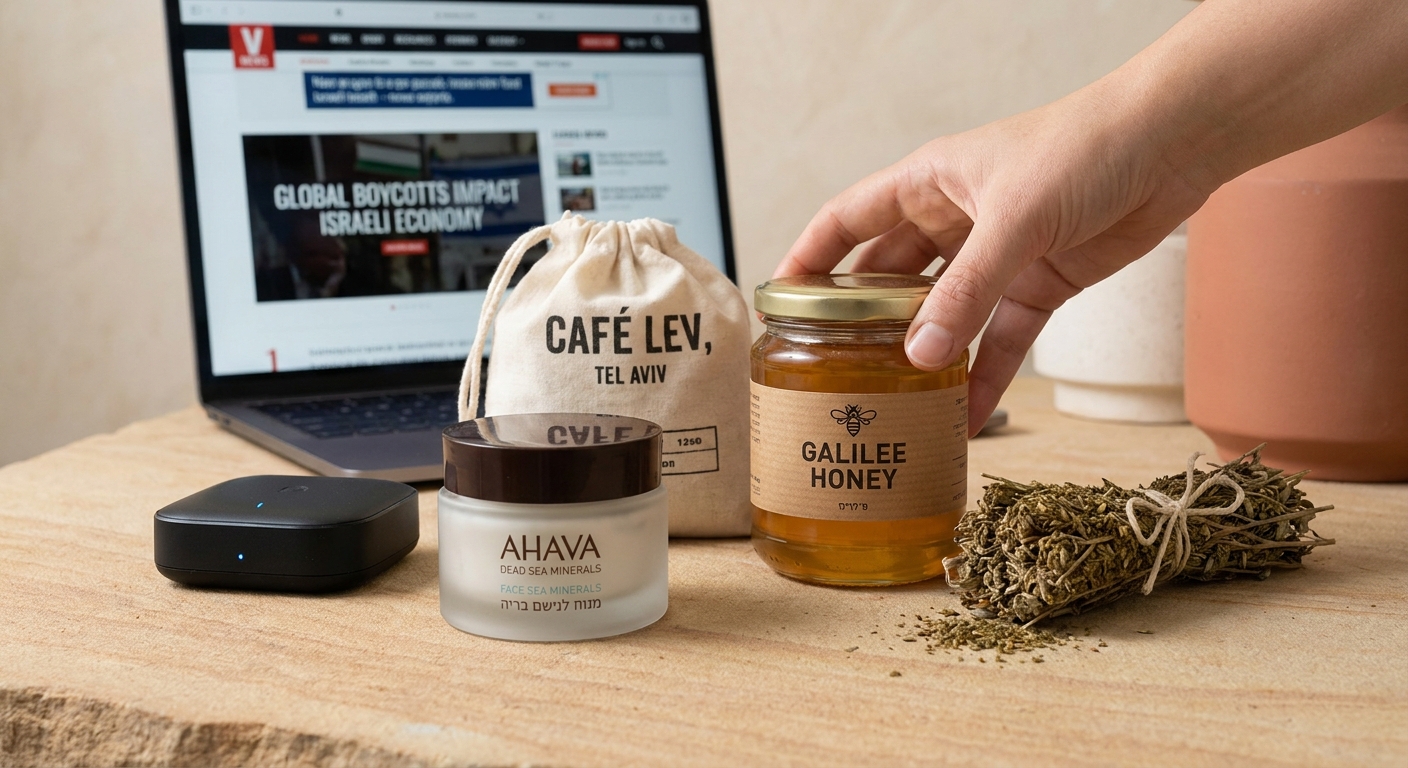
You are not imagining it. One week your usual Dead Sea cream is in stock, the next it is gone, relabeled, or suddenly “unavailable in your region.” The same thing is happening with pantry staples, gift items, and specialty goods from Israel. For shoppers who want to support Israeli businesses, it has become weirdly hard to tell what is actually Israeli, what is just marketed with Holy Land imagery, and what will still ship without drama. That is frustrating, especially when you are trying to make a simple purchase and every store seems to have a different rule.
The good news is that the gap left by boycotted or quietly dropped mass-market brands is being filled by smaller Israeli makers. These indie brands are often more direct-to-consumer, more transparent about ownership, and less dependent on big European retail chains. If you want to buy Israeli products online after boycotts, the smartest move right now is not chasing every missing legacy brand. It is building a short list of verified Israeli sellers in skincare, food, Judaica, home design, and gifts, then buying directly whenever possible.
⚡ In a Hurry? Key Takeaways
- Yes, you can still buy Israeli products online after boycotts, but direct-from-brand shopping now works better than relying on major chains.
- Check for clear signs like Israeli ownership, shipping from Israel, local manufacturing details, and a real company address before you buy.
- Smaller indie brands can be a safer bet because they are often less exposed to sudden retail removals and give you a more direct way to support Israeli businesses.
What changed, and why shelves suddenly look different
A lot of people still think a missing product means it sold out. Sometimes that is true. Lately, though, there is another pattern. Retailers and importers are trimming risk. Some are avoiding controversy. Others are responding to political pressure, shipping headaches, or local policy shifts.
The result is the same for regular shoppers. Products disappear quietly. Search results get thinner. Familiar Israeli labels stop showing up in marketplaces you used to trust.
That is why this moment matters. If you want your spending to reflect your values, waiting for the old big-name products to come back may not be the best plan.
Why indie Israeli brands are stepping into the gap
Smaller brands have a few advantages right now.
They sell direct
Instead of depending on a supermarket chain or a beauty retailer to keep them on the shelf, many indie Israeli businesses sell through their own sites. That means fewer middlemen and fewer chances for a quiet delisting.
They are easier to verify
With a big mass-market label, it is not always obvious where the company is based, where the product is made, or whether “inspired by Israel” is doing a lot of marketing work. Indie brands usually tell their story more clearly. You can often see the maker, the workshop, the studio, or the production location.
They often make better solidarity purchases
If your goal is economic support, buying from a smaller Israeli-owned business can have a more direct impact than grabbing a legacy brand from a multinational retail site.
How to buy Israeli products online after boycotts without guessing
You do not need a political science degree to shop smart. Use a simple checklist.
1. Check where the company is actually based
Look for an Israeli business address, an about page that names the founders, and contact details that feel real. If the site says “inspired by the Dead Sea” but never says who owns the company, slow down.
2. Look for plain manufacturing language
“Made in Israel” is stronger than vague phrases like “Holy Land formula” or “Mediterranean tradition.” Honest sellers usually say where products are produced and packed.
3. Review shipping details before you fill your cart
This matters more than it used to. Check shipping regions, expected delivery windows, customs notes, and return policies. A verified Israeli brand that ships reliably is more useful than a famous one that keeps canceling orders.
4. Start with categories that travel well
Skincare, dry pantry goods, home items, Judaica, stationery, and gifts are often easier bets than fragile or temperature-sensitive products.
5. Save trusted stores once you find them
Make your own short list. Bookmark them. Sign up for restock alerts. This saves you from starting from zero every time a marketplace changes its rules.
The best categories to switch first
Skincare and Dead Sea alternatives
This is where many shoppers feel the biggest gap. If your old go-to Dead Sea brand vanished, look for smaller Israeli skincare makers that are transparent about minerals, manufacturing, and shipping. Direct brand websites and Israeli specialty stores usually give you better odds than giant beauty platforms right now.
Pay attention to ingredients and packaging size. Some indie products cost more up front, but they may be more concentrated or come from smaller-batch production.
Pantry staples
Think spice mixes, tahini, olive oil, halva, date products, herbal teas, and specialty snacks. These are often easier to source through Israeli grocers, curated Judaica shops, and direct exporters than through mainstream supermarkets.
If your regular grocery chain dropped a product, search by product type first, not brand name. You may find a smaller Israeli producer that was never on your radar.
Judaica and home design
This is one of the easiest places to buy directly from Israeli creators, and often one of the most meaningful. Instead of a generic imported item, you can buy from a working studio in Israel. If that speaks to you, take a look at From Israeli Studios to Your Shelf: The New Bauhaus‑Inspired Mezuzot Turning ‘Made in Israel’ Into a Design Statement. It is a good example of how buyers are shifting from mass-market products to design-led Israeli makers.
Gifts and small-batch artisan goods
Candles, ceramics, paper goods, textile items, and boutique foods are often less exposed to mainstream retail politics because they already live in direct sales channels. They also make good “first switch” purchases if you want to support Israeli businesses without overthinking every item.
Red flags to watch for
Not every “Israeli-style” product is Israeli. A few warning signs can save you money and frustration.
Vague origin claims
If a listing says “Middle Eastern,” “Dead Sea inspired,” or “Jerusalem collection” but never states where the product is made, that is a clue.
No business identity
If there is no address, no founder story, no social presence, and no clear shipping origin, move on.
Marketplace confusion
Some third-party listings use old brand names, outdated photos, or incomplete shipping info. Whenever possible, buy from the brand’s own website or a specialty seller that clearly states origin.
A practical shopping plan for this week
If you want a simple way to start, do this.
Step 1: Pick three products you buy repeatedly
Maybe it is face cream, tahini, and a gift item. Focus there first. Replacing everything at once is tiring.
Step 2: Find one direct Israeli source for each
You are building a personal fallback list. Once you have reliable options, future shopping gets easier.
Step 3: Buy one test order
Start small. Check packaging, delivery speed, customs handling, and customer service. Then reorder with confidence.
Step 4: Share working links with your community
This helps more than people realize. A trusted recommendation from a friend or synagogue group often beats hours of searching alone.
At a Glance: Comparison
| Feature/Aspect | Details | Verdict |
|---|---|---|
| Direct from Israeli indie brands | Usually clearer on ownership, origin, and shipping. Less dependent on major retail chains. | Best option for reliable support and transparency. |
| Big-name brands through mainstream retailers | Familiar, but more likely to vanish quietly or show region-based restrictions. | Convenient when available, but less dependable right now. |
| Third-party marketplace listings | Easy to search, but often weaker on origin details, shipping clarity, and authenticity checks. | Use carefully. Verify before buying. |
Conclusion
This is one of those moments when shopping stops being routine. In the last 24 hours alone, headlines have bounced from Dutch import bans on certain Israeli goods to more European chains quietly dropping Dead Sea labels. That leaves a lot of people asking the same thing. What can I actually buy, and where? The answer is not to keep chasing every disappearing shelf tag. It is to switch, on purpose, to smaller Israeli-owned brands that are easier to verify and more likely to reach you directly. If you want to buy Israeli products online after boycotts, a short list of trusted indie sellers is now worth more than brand recognition. It gives you a practical way to redirect your spending, discover new Holy Land products, and do something concrete when so many products are being politicized in real time. Small purchases count. Right now, they may count more than ever.