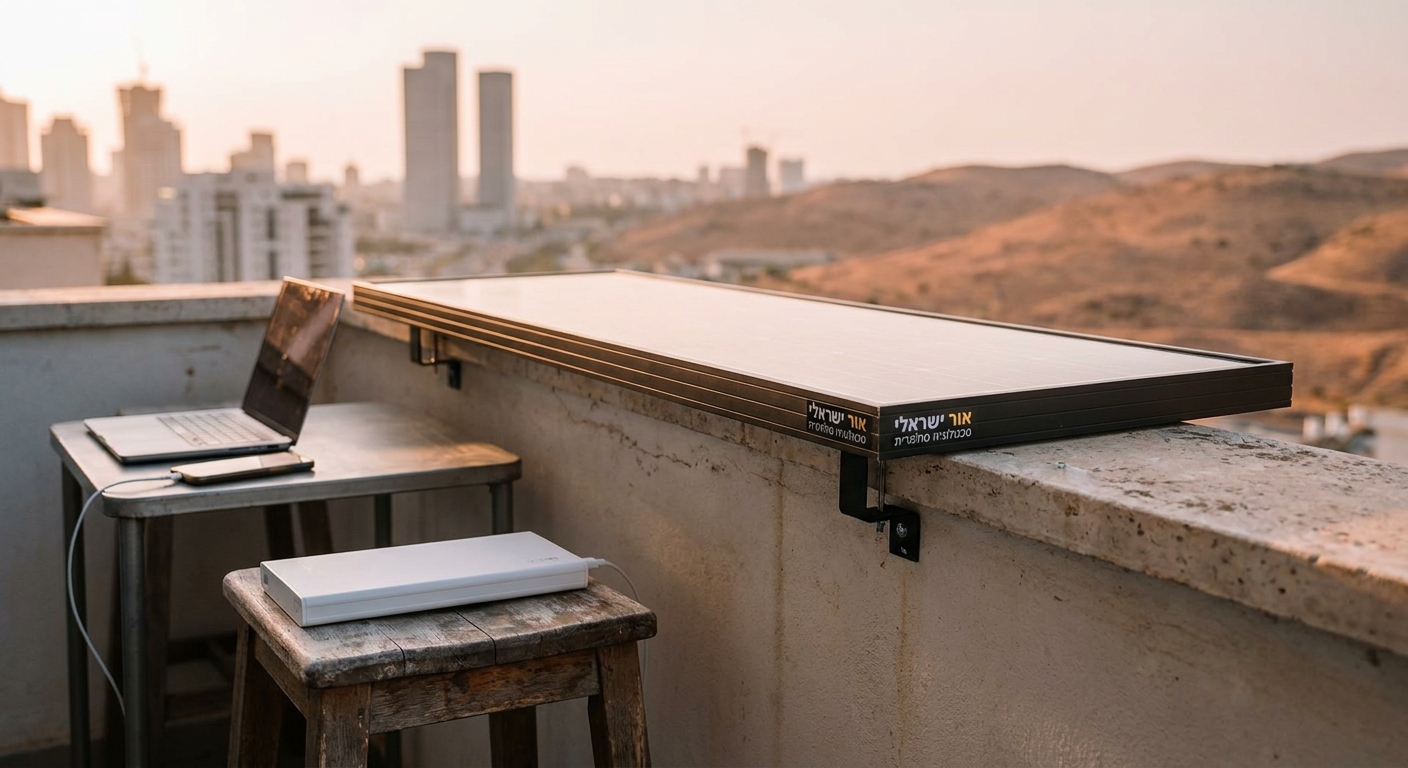
The power flickers once, then twice, and suddenly you are doing blackout math in your head. How long will the Wi-Fi last. Is the phone charged. Will the fridge make it. That stress is real, and for a lot of apartment dwellers, the usual backup options feel absurd. A gas generator is noisy, smelly, and often not even allowed. A whole-home battery setup can cost as much as a used car and turn into a renovation project. That is why the new wave of compact solar backup systems matters so much. One standout is the Israeli portable solar backup kit for apartments, a quiet battery-and-panel combo built for people who want something simple, safe, and realistic. Inspired by the kind of solar know-how Israel has sharpened in the Negev, these kits aim to keep the essentials running when the grid blinks, without asking you to rewire your life.
⚡ In a Hurry? Key Takeaways
- An Israeli portable solar backup kit for apartments can keep phones, laptops, lights, routers, and some small appliances running quietly during outages.
- Buy based on watt-hours and surge rating first, not marketing claims like “powers your home.” Make a list of what you actually need in a blackout.
- Do not plug a portable power station into home wiring unless a licensed electrician has set up a legal transfer solution. For most renters, direct plug-in use is the safer path.
Why this kind of backup is suddenly getting attention
People are not imagining it. The grid does feel shakier than it used to. Heat waves push air conditioning demand through the roof. Storms knock out local lines. Global energy shocks make everything feel a little less stable.
At the same time, most people living in apartments or smaller homes are stuck between two bad choices. Option one is a generator, which is often impossible on a balcony and a terrible idea indoors. Option two is a permanent battery install, which can be great, but usually costs too much and asks for more space, more approvals, and more patience than most renters have.
That is where a compact solar backup kit starts to make sense. Think of it as a big rechargeable battery with useful outlets, plus foldable or portable solar panels that can top it up when the sun is out.
What the Israeli angle actually means here
Israel has spent years getting very good at making solar practical in harsh conditions. When you build for intense sun, heat, dust, and efficiency limits, you learn how to squeeze a lot out of a compact system. That is why products coming out of Israeli cleantech circles often feel less like science projects and more like tools.
The appeal here is not just patriotism or novelty. It is that the design philosophy fits real life. Small footprint. Fast setup. Quiet operation. Useful output options. In short, something a person can actually use in a city apartment without needing a contractor on speed dial.
What a portable solar backup kit can realistically do
Let us strip away the hype. These kits are not magic. They are excellent for essentials, but they are not a substitute for a full-house backup system.
Usually a good fit for
Phones, tablets, laptops, Wi-Fi routers, LED lamps, fans, CPAP machines, small TVs, rechargeable tools, and sometimes a compact cooler or mini fridge. Some larger portable stations can also help with a full-size refrigerator for a limited time, depending on startup surge and overall battery size.
Usually not a good fit for
Central air conditioning, electric ovens, space heaters, hair dryers, kettles, and anything else that turns electricity into serious heat. Those devices chew through battery power at a shocking speed.
The easy rule of thumb
If the item gets hot on purpose, be careful. If the item sips power and mostly runs electronics, you are in much better shape.
The specs that matter more than brand slogans
If you are shopping for an Israeli portable solar backup kit for apartments, do not get distracted by the biggest number on the box.
Battery capacity, measured in watt-hours
This tells you how much energy is in the tank. A 500Wh unit is fine for charging devices and running a router and lamp for quite a while. A 1,000Wh to 2,000Wh unit starts to feel like real outage insurance for a small household.
Continuous output, measured in watts
This tells you how much the unit can supply at one time. If your router uses 15 watts and a lamp uses 10, that is easy. If you want to run a fridge that needs 120 watts while running, plus a startup surge, the inverter has to handle it.
Surge rating
Motors often need a brief burst of extra power to start. This matters for fridges, pumps, and some fans. Ignore this number and you may end up with a backup unit that looks strong on paper but cannot start the thing you bought it for.
Solar input speed
Some units can only sip power from a panel. Others can recharge much faster. If your plan depends on using sunlight during a multi-day outage, this matters a lot.
Battery chemistry
Look for LiFePO4 if possible. It tends to last longer, handles more charge cycles, and is increasingly common in better portable power stations.
Best use cases for apartment living
This is where these systems shine.
The “keep me connected” setup
A mid-size battery station paired with one or two folding solar panels can keep your phone, laptop, internet gear, and a couple of lights going for many hours, sometimes days with careful use.
The “medical and comfort” setup
If someone in the home uses a CPAP machine or you simply need a fan during a heat wave, a larger unit can be worth every penny. Quiet backup is a very different experience from sweating next to a roaring generator.
The “food protection” setup
If your biggest worry is not losing groceries, focus on whether the power station can support your fridge’s startup surge and how many hours of runtime you can expect. Some homes may do better with a smaller dedicated backup just for refrigeration, while everything else stays on smaller batteries.
Common buying mistakes to avoid
Here is where a lot of smart people get tripped up.
Buying for fantasy, not reality
Do not shop for “whole-home backup” if your real goal is internet, lights, and phone charging. You will overspend and still feel disappointed.
Ignoring solar panel practicality
A foldable panel is only useful if you actually have somewhere safe and sunny to place it. South-facing balcony. Rooftop access with permission. Bright patio. If your apartment gets almost no direct sun, the battery itself may still be useful, but the solar part will be more limited.
Forgetting recharge time
A giant battery sounds great until you realize it takes forever to refill from a tiny panel. Match panel size to battery size and to your likely outage pattern.
Confusing extension-cord backup with home integration
A portable unit is mostly meant for plugging devices directly into it. Running your apartment circuits from it is a different thing entirely and needs proper electrical work.
Safety matters more than convenience
This part is boring right up until it is not.
Never use a gas generator indoors or on an enclosed balcony
Carbon monoxide is deadly. Every year, people make this mistake during outages.
Be careful with solar panel placement
Secure foldable panels so wind cannot throw them. Keep cables tidy. Do not create a trip hazard in a dark apartment during an outage.
Do not backfeed your home
That means trying to push power from a portable station into your home wiring through a random outlet or improvised adapter. It is dangerous, can damage equipment, and can put utility workers at risk.
How to figure out the right size in ten minutes
Make a short blackout list. Write down only what you truly care about for the first 12 to 24 hours.
- Internet router
- Phone charging
- One lamp per room you use
- Laptop
- Fan or CPAP if needed
- Fridge, only if this is a top priority and your budget allows
Then check each item’s wattage. Add up what may run at the same time. Multiply the key items by the number of hours you want. That gives you a rough watt-hour target.
For many apartment users, a system in the 700Wh to 1,500Wh range hits the sweet spot. Small enough to move. Big enough to matter.
Who this is really for, and who should skip it
Good match
Renters, condo owners, people in blackout-prone areas, remote workers who need internet, older adults who want a simple backup, and anyone who hates the idea of storing gasoline.
Probably not enough on its own
Large homes with heavy electrical loads, people who need to power central HVAC, or anyone expecting a portable unit to act like a full standby generator.
Why this is more than just another nice idea
A lot of innovation stories feel abstract. This one does not. A portable, ready-to-buy solar backup kit is useful right now. It turns concern into a plan. It also supports Israeli cleantech in a way that is tangible. You are not just cheering from the sidelines. You are putting smart energy design to work in your own home.
At a Glance: Comparison
| Feature/Aspect | Details | Verdict |
|---|---|---|
| Noise and apartment-friendliness | Battery-based systems run quietly, produce no fumes, and are usually safe to store indoors when used properly. | Big win over gas generators for renters and small homes. |
| What it can power | Best for phones, routers, laptops, lights, fans, and other low-to-medium draw essentials. Not ideal for high-heat appliances or central AC. | Excellent for outage basics, not a full-house replacement. |
| Setup and cost | Usually far cheaper and simpler than permanent battery installs, especially if you only need plug-and-play backup. | Strong value if you size it honestly and have at least some solar access. |
Conclusion
If blackouts have been making you feel stuck between overpriced home upgrades and sketchy generator ideas, this category is worth a serious look. A portable, apartment-friendly solar backup kit from Israel arrives at exactly the right moment, when rolling outages, heat waves, and geopolitical stress have people thinking hard about resilience. The big value is not just that it exists. It is that it is practical. Quiet. Compact. Ready to buy. If you focus on the loads you truly need, choose the right battery size, and avoid unsafe shortcuts, an Israeli portable solar backup kit for apartments can move you from worry to a calm, workable plan. That is useful technology. Not flashy. Just protective in the ways that count.