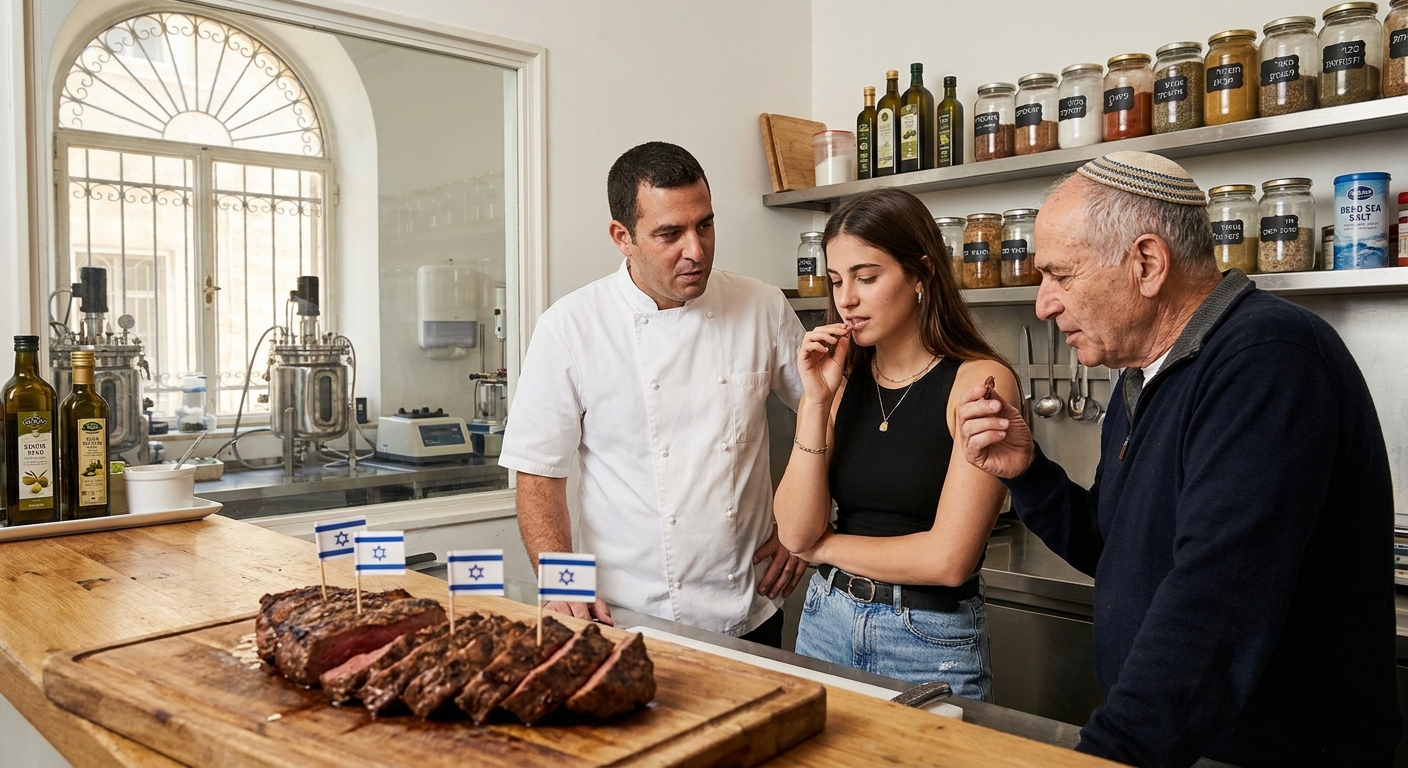
You have every right to be skeptical. For years, cultivated meat stories have sounded like science fair promises dressed up as dinner plans. A breakthrough here, a pilot there, and yet your supermarket still looks much the same. That is why Israel is worth watching right now. Not because every claim is magical, but because some of the work is moving past glossy headlines and into real regulatory, government, and manufacturing steps. The name getting the most attention is Aleph Farms, best known for its cultivated steak work. But the bigger story is that Israel is trying to build an ecosystem, not just one showpiece product. That means bio-reactors, food-tech grants, pilot production, and public backing from senior officials. If you want to know whether Israeli cultivated meat, especially the Israeli cultivated meat Aleph Farms steak story, is finally getting closer to your plate, the honest answer is yes, but first in limited, premium, carefully controlled ways, not as a cheap weeknight grocery staple.
⚡ In a Hurry? Key Takeaways
- Israel’s cultivated meat sector is still early, but Aleph Farms and a handful of local food-tech players have moved beyond hype into real regulatory and production milestones.
- If you want to support this space, watch for pilot restaurant launches and approved premium products first, not mass-market supermarket packs.
- The value is real for animal welfare, climate, and food security, but prices, scale, and consumer trust still need time to catch up.
Why Israel is back in the food-tech conversation
Israel has spent years building a reputation as a serious alternative-protein hub. That includes plant-based proteins, fermentation, and cultivated meat. What makes it stand out is not just the number of startups. It is the mix of academic research, government interest, venture funding, and food security thinking.
That last point matters more now than ever. In a country where supply chains and resilience are not abstract ideas, producing more protein with less land and fewer animals is not just a branding exercise. It is seen by many policymakers as practical.
So when headlines mention Israeli bio-reactors and cultivated steak, the useful question is not, “Is this futuristic?” It is, “Who is actually getting support, and what are they building?”
Aleph Farms is the headline name, and for good reason
Aleph Farms has become the poster child for Israeli cultivated meat because it chose one of the hardest products to imitate. Not nuggets. Not mince. Steak.
That is a bold move. A steak is not just muscle cells. People expect texture, structure, mouthfeel, and something that feels like an actual cut of meat, not a shaped paste. Aleph Farms has focused on growing beef from animal cells in controlled conditions, aiming to create whole-cut products that look and eat more like conventional steak.
Why that matters
If a company can make a convincing steak, it says a lot about the maturity of the tech. It does not mean cheap cultivated ribeyes are around the corner. It does mean the sector is trying to solve the hard problem, not just the easy demo.
The Israeli cultivated meat Aleph Farms steak story also matters because it has drawn validation beyond startup circles. Regulatory progress and government visibility are what move this from “interesting prototype” to “possible food product.”
What “government backing” actually means here
Government backing can sound vague, so let’s make it plain. In this context, it usually means some mix of grants, public endorsements, innovation authority support, pilot program help, and cooperation between research institutions and companies.
That does not guarantee success. Startups can still fail. Products can still stall. But it does separate serious contenders from companies living on pitch decks and pretty renderings.
Israel has been more open than many countries to supporting alternative protein as a strategic sector. That includes cultivated meat because it touches several national priorities at once.
- Food security
- Agricultural innovation
- Climate and resource efficiency
- Exportable technology
- Reduced dependence on livestock inputs
When a cultivated meat company gets recognition at high levels, it is not just a photo op. It can help with investment confidence, industry partnerships, and public trust.
What is really happening on the ground right now
Here is the part many readers want. What is actually changing, beyond the press releases?
1. The sector is shifting from concept to pilot scale
More companies are working on the ugly, boring, necessary parts. Bioreactor design. Cell-growth media costs. Manufacturing repeatability. Regulatory paperwork. These are not exciting headline words, but they are what turn a lab sample into food.
2. Premium products are likely to come first
If cultivated steak reaches consumers soon, it will almost certainly show up in small quantities, in select restaurants, tasting programs, or tightly managed retail pilots. Think special occasion, not family value pack.
3. Hybrid products may beat pure cultivated cuts to your kitchen
This is one of the most realistic near-term outcomes. A product that mixes cultivated fat or cells with plant-based ingredients can be easier to scale and cheaper to sell while still improving taste and texture. For many shoppers, that may be the first truly practical bridge product.
4. Regulation is now part of the main story
This is a good thing. If you care about safety and honesty, you want cultivated meat to go through proper review. Approval processes can feel slow, but slow is often what food should be.
Why cultivated steak is harder than cultivated chicken bites
This is where the hype often loses people. “They grew meat from cells” sounds simple, until you remember that meat is not one uniform substance.
A steak has:
- Muscle fibers
- Fat distribution
- Texture and chew
- Moisture balance
- Structure that holds together during cooking
That is why Aleph Farms gets attention. It is trying to make something people can instantly judge with their senses. If the bite is wrong, everyone knows. If the texture is off, no amount of eco-friendly messaging will save it.
For non-tech readers, the easy way to think about this is bread versus wedding cake. Both are baked goods. One is much harder to make well at a high standard. Cultivated steak is the wedding cake of this industry.
Who else benefits if Israel gets this right
It is not only one company. A cultivated meat sector creates demand for equipment makers, cell-media specialists, research labs, food engineers, ingredient suppliers, and manufacturing partners.
That ecosystem effect is a big reason governments care. A successful flagship product can pull a whole local industry upward.
And for consumers outside Israel, this matters too. Food-tech ideas proven in one market often spread through partnerships, licensing, or export. So even if you never buy a steak with Hebrew on the box, the work happening there could shape what lands in your local restaurant or freezer aisle later.
What products might realistically reach your kitchen first
This is where it helps to stay grounded.
Most likely first wave
- Restaurant-only cultivated tastings
- High-end limited releases
- Hybrid meat products with cultivated components
- Processed or structured items before everyday full steaks
Less likely in the short term
- Cheap cultivated supermarket steak
- Wide national retail availability
- Price parity with regular beef any time soon
That may sound less thrilling, but it is actually a sign of realism. New food systems usually arrive in stages. Think of how plant-based burgers first popped up in specific restaurants and premium grocery shelves before becoming easier to find.
Should conscious consumers be excited, cautious, or both?
Both.
You can be excited because cultivated meat offers a real route toward reducing slaughter, lowering some environmental pressures, and making protein production less vulnerable to disease outbreaks or livestock shocks.
You should also be cautious because this is still expensive, technically tough, and not yet proven at broad commercial scale. A company can have great science and still struggle with manufacturing economics.
Three smart ways to read the news
When you see the next cultivated meat headline, ask these questions:
- Has the product cleared regulatory review anywhere meaningful?
- Is this a real production milestone or just a research result?
- Can ordinary people buy it soon, or is it still a showcase item?
Those questions cut through a lot of noise very quickly.
How you can support the innovation without falling for hype
You do not need to become a cheerleader for every startup. But if your values include animal welfare, climate concerns, and food resilience, there are practical ways to support progress.
Try pilot products when they become available
Early launches matter. They show there is demand beyond investor presentations.
Reward honesty
Support brands that clearly explain what the product is, how it is made, and where it sits on price and availability.
Do not dismiss hybrids
People sometimes act as if a product must be 100 percent cultivated to count. That is not very useful. A hybrid product that meaningfully reduces animal use and improves sustainability can still be a big step.
Push for clear labeling and strong safety standards
Consumer trust is not built by hype. It is built by transparency.
The political noise is real, but it is not the whole story
Coverage around Israel can get pulled into wider political arguments very quickly. That is unavoidable. But if your goal is to understand food-tech progress, it helps to separate geopolitical reactions from whether a product is scientifically, commercially, or ethically advancing.
For readers who care about what ends up on the plate, the better focus is simple. Which companies are earning real validation? Which facilities are scaling? Which products are getting close to legal sale? Those answers tell you more than social media shouting ever will.
At a Glance: Comparison
| Feature/Aspect | Details | Verdict |
|---|---|---|
| Israeli cultivated meat progress | More serious than a few years ago, with stronger ecosystem support, pilot work, and visible flagship companies like Aleph Farms. | Promising, but still early. |
| Aleph Farms steak potential | Technically ambitious whole-cut cultivated beef has high symbolic value and could lead premium launches first. | A real milestone product, not yet an everyday grocery item. |
| What reaches consumers first | Limited restaurant servings, premium tastings, and hybrid products are more realistic than cheap retail steak. | Expect small, controlled rollouts before mass adoption. |
Conclusion
If you have been waiting for cultivated meat news that feels grounded in reality, Israel is one of the better places to watch. The Israeli cultivated meat Aleph Farms steak story is not proof that the future has fully arrived. But it is proof that some parts of this industry are moving from lab hype to harder, more meaningful steps like validation, pilot production, and public backing. That matters. It helps cut through political noise and tech jargon so you can see where Israel’s alternative-protein ecosystem is genuinely accelerating, which companies and pilot products are getting serious support, and how conscious consumers can back innovation that fits their values on animal welfare, climate, and food security. You do not need to believe every headline. You just need to know which ones are finally connected to something real.