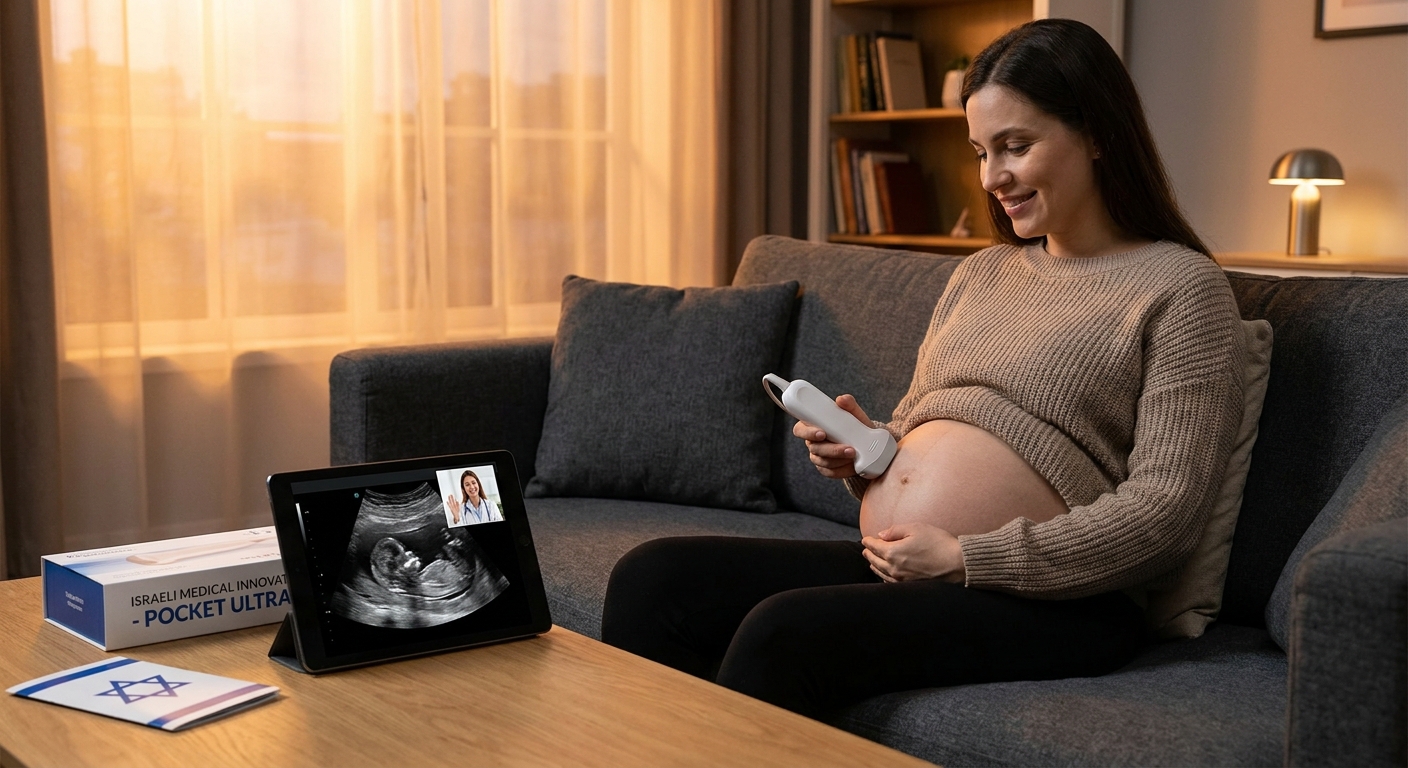
Missing a prenatal appointment can feel bigger than just missing an appointment. It can mean another week of worry, another long drive, another day off work, or another round of arranging childcare just to get a quick check that everything is okay. That is why the sudden buzz around the Israeli at home ultrasound Pulsenmore pregnancy scanner matters. This is not just stock market chatter. It points to a real shift in how some American families may monitor pregnancy from home, with a handheld scanner linked to a care team through telehealth. For some parents, especially in rural areas or crowded cities with overbooked clinics, that could mean faster reassurance and fewer exhausting trips. But home ultrasound also comes with real questions. What can it actually show. Who reads the scan. Will insurance pay. And can it replace a doctor visit. The short answer is no. It can help, but it is still one piece of care, not the whole thing.
⚡ In a Hurry? Key Takeaways
- Pulsenmore’s home pregnancy scanner is meant to add remote monitoring between visits, not replace standard prenatal ultrasounds or emergency care.
- If your clinic offers one, ask who reviews the scan, how fast results come back, what symptoms still require an in-person visit, and whether insurance covers the service.
- The biggest value is convenience and peace of mind, but the safest use is inside a real care plan with an OB, midwife, fertility clinic, or maternal-fetal medicine team.
Why this news is getting so much attention
Pulsenmore is an Israeli company that makes a handheld home ultrasound device for pregnancy monitoring. The reason people in the U.S. are suddenly hearing about it is simple. The company just announced a nationwide partnership tied to remote prenatal care across all 50 states, and investors reacted fast.
That kind of news can sound distant and technical. For families, it is actually very personal. It means more providers may soon offer an at-home scan option to pregnant patients who need extra check-ins, fertility monitoring, or support between office visits.
In plain English, this is a gadget-and-service mix. You do not just buy a scanner and start diagnosing yourself on the couch. The idea is that you use the device at home, usually with an app and guidance, then the images or clips go to a clinician for review.
What the Pulsenmore scanner actually is
Think of it as a small ultrasound probe designed for home use. It connects with software that helps the user capture a scan. Instead of trying to interpret fuzzy black-and-white images yourself, the scan is shared with a medical professional.
That distinction matters. Consumer wellness gadgets often promise reassurance but leave you to figure things out alone. A medical home-ultrasound system is supposed to sit inside a supervised care model.
What it may be used for
Use cases can vary by provider, but common ones may include:
- Checking in during an ongoing pregnancy between office visits
- Monitoring higher-risk patients who need more frequent follow-up
- Supporting fertility treatment or early pregnancy care in some settings
- Reducing unnecessary travel for patients far from a clinic
What it is not for
It is not a replacement for your anatomy scan, growth scans ordered by your doctor, lab work, blood pressure checks, or emergency evaluation. It also is not a home toy for unlimited “just because” peeks at the baby.
How at-home pregnancy ultrasound usually works
If your clinic enrolls you in a program using the Israeli at home ultrasound Pulsenmore pregnancy scanner, the process may look something like this:
- You receive the device through your provider, clinic, or telehealth program.
- You download an app or use a guided platform.
- You place the probe on your abdomen with ultrasound gel and follow prompts.
- The system captures images or clips.
- A clinician reviews the scan and sends guidance or follow-up instructions.
That is the ideal path. The important part is the last step. A trained professional should be involved. Ultrasound is powerful, but reading it correctly is where the real value lives.
Why American families may say yes to this
The appeal is easy to understand.
Prenatal care in the U.S. can be hard to access. Some counties have few or no OB services. Some practices are overloaded. Even in big cities, patients can wait weeks for an appointment, sit in traffic for hours, then spend ten minutes in the exam room.
For people on fertility journeys, the stress can be even sharper. Every day feels loaded. Every symptom gets overanalyzed. Having a supervised at-home scan option could lower some of that pressure.
The biggest upsides
- Less travel. Especially important for rural families or patients on bed rest.
- Faster reassurance. A quick home scan may answer routine questions sooner.
- Better follow-up. High-risk pregnancies often need more touchpoints.
- More flexible care. Good for working parents, military families, and people juggling other children.
The questions people should ask before using one
This is where calm beats hype. Before you accept or buy any home ultrasound service, ask these questions.
1. Who is reviewing my scan?
You want a clear answer. Is it your OB practice. A maternal-fetal medicine specialist. A telehealth clinician. A sonographer who escalates concerns. Know the chain of responsibility.
2. How quickly do I get results?
Same day. Within 24 hours. Only during business hours. This matters a lot for anxiety and safety.
3. What exactly is the device checking for?
Ask what the scan can reasonably confirm. Fetal heartbeat. Fetal position. General movement. Limited follow-up points. It may not answer every question you have.
4. What symptoms mean I should skip the app and call right away?
This is a big one. Bleeding, severe pain, reduced fetal movement, severe headache, swelling, fever, or signs of preterm labor should not be “wait and scan at home” situations unless your provider has told you otherwise.
5. Is this covered by insurance?
Coverage may depend on the program, diagnosis, state, and insurer. Some models may be bundled into remote monitoring. Others may not. Ask for the expected out-of-pocket cost before agreeing.
6. Is my data private?
You are sending intimate medical images through an app. Ask where the data is stored, who can access it, and whether the platform follows U.S. health privacy rules.
What home ultrasound can and cannot tell you
This is the part that deserves the most honesty.
Ultrasound images can be amazingly useful. They can also be easy for untrained eyes to misunderstand. A blurry image may mean nothing more than a tricky angle, early gestation, body position, or user technique. But to a worried parent, it can feel catastrophic.
That is why these systems work best when they are framed correctly.
What it can do well
- Add check-ins between appointments
- Support ongoing monitoring under clinician guidance
- Reduce some unnecessary office visits
- Help patients feel more connected to care
What it cannot do well on its own
- Replace a full diagnostic ultrasound exam
- Rule out every complication
- Interpret findings without trained review
- Manage urgent symptoms
Why this technology came from Israel
Israel has a strong track record in medical device development, digital health, and remote care tools. Companies there often build solutions for practical problems first, then scale globally. Pulsenmore grew out of that environment, with work tied to making ultrasound more portable and easier to use outside a hospital setting.
That does not automatically make the product good or bad. It just explains why an Israeli lab could be the source of a device now moving into American prenatal care.
What OB clinics, doulas, and fertility practices should think about
This is not just a patient story. Care teams need to think carefully too.
For OB and maternal-fetal medicine clinics
Home scanning can help with reach and workflow, but only if staff review paths are clear. If a clinic adds remote ultrasound, it needs rules for triage, documentation, patient instruction, and escalation.
For fertility practices
Patients in fertility care are often highly engaged and highly anxious. A home scan could be useful, but expectations need to be managed from day one. Patients should know what the scan can show at each stage and what still requires in-person imaging.
For doulas and birth workers
Doulas are often the first people clients text when they are worried. It helps to understand the basics so you can gently remind clients that a home scanner is part of a medical plan, not a stand-alone safety net.
Will insurance and telehealth make this easy
Maybe. But not instantly.
The good news is that remote care is more normal now than it was a few years ago. Many patients are already used to telehealth check-ins, portal messages, and home monitoring for blood pressure or glucose. Home ultrasound fits into that broader trend.
The messy part is payment. Some insurers may cover it when prescribed as part of a medical program. Others may not. Some employers or health systems may pilot it first. If you are offered this service, ask for billing details in writing.
Who stands to benefit most first
Not every pregnancy needs home ultrasound. The early best fit will likely be people who face access problems or need more frequent touchpoints, such as:
- Patients in rural areas
- High-risk pregnancies needing closer monitoring
- People with long travel times to specialty care
- Busy families balancing work and childcare
- Fertility patients needing careful follow-up
Where caution is still needed
Convenience can make any health gadget feel more complete than it really is. That is the trap to avoid.
A clean app, a handheld scanner, and a quick clip on your phone can create a false sense that you are fully covered. You are not. Prenatal care is still a mix of exams, labs, blood pressure checks, symptom review, diagnostic scans, and clinician judgment.
If this technology rolls out widely, the best programs will be the ones that say that clearly.
At a Glance: Comparison
| Feature/Aspect | Details | Verdict |
|---|---|---|
| Convenience | Lets patients capture supervised scans from home instead of driving in for every routine check-in. | Strong benefit, especially for rural, high-risk, or time-crunched families. |
| Medical usefulness | Can support remote monitoring when reviewed by clinicians, but does not replace full diagnostic imaging or urgent care. | Useful as an add-on, not as a substitute for standard prenatal care. |
| Cost and access | Coverage may vary by insurer, provider program, and medical need. Setup depends on clinic participation and telehealth support. | Promising, but patients should verify insurance, workflow, and turnaround times before relying on it. |
Conclusion
The big story here is not just that Pulsenmore stock jumped. It is that an Israeli home-ultrasound company is moving closer to American living rooms at a moment when prenatal care feels stretched and many families are tired of choosing between reassurance and logistics. If your provider starts offering the Israeli at home ultrasound Pulsenmore pregnancy scanner, you do not need to panic or rush. Ask smart questions. Find out who reads the scans, what they are for, what they are not for, and what it will cost. Used well, this kind of tool could save time, reduce stress, and help more patients stay connected to care between visits. Used carelessly, it could create confusion or false comfort. That is why this matters right now. Real families, fertility patients, doulas, and OB clinics need a clear, human explanation before the headlines turn into everyday practice.