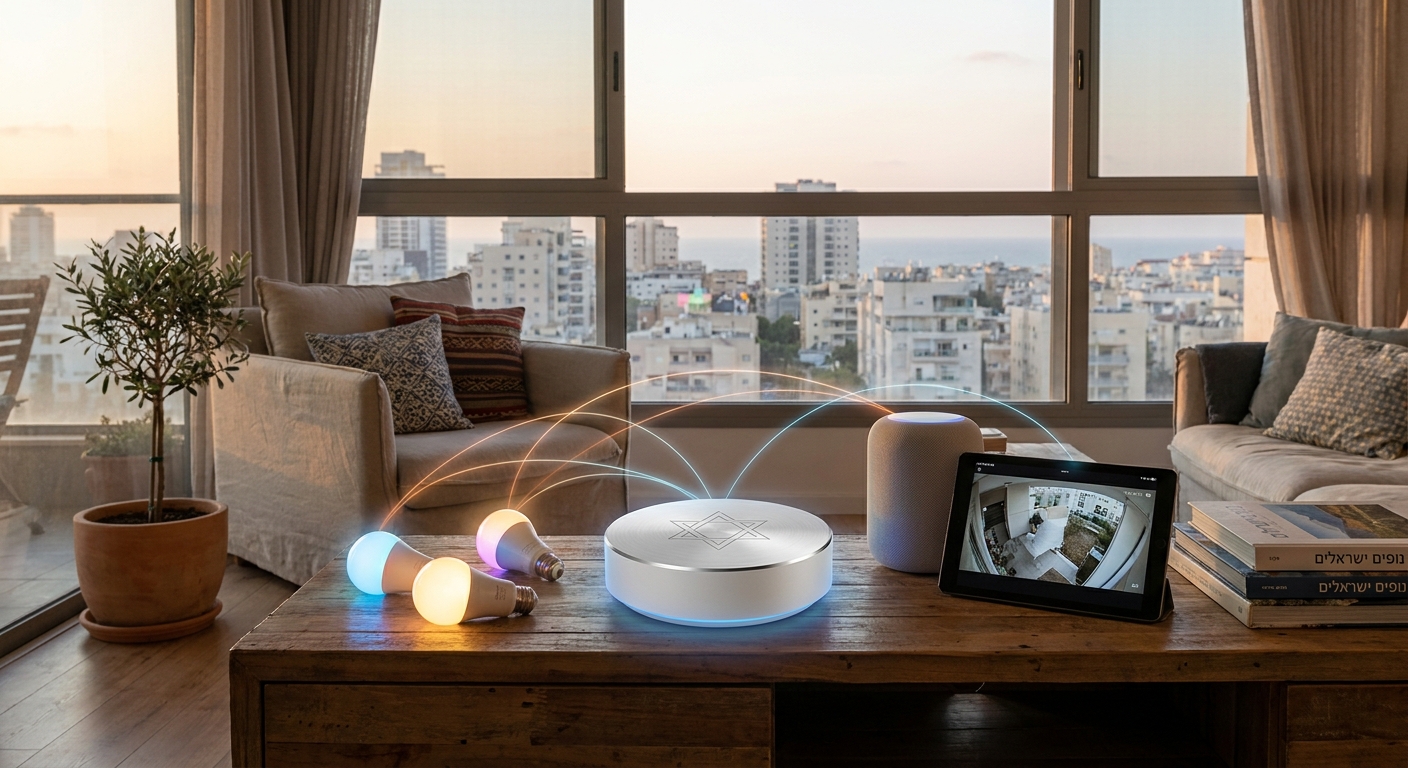
You buy smart bulbs to make life easier. Then one stops responding. The camera feed freezes. A plug goes offline. The app just spins, and suddenly you are walking around the house flipping switches and rebooting the router like it is 2009. That frustration is exactly why the idea of an Israeli AI smart home hub matters. Instead of adding yet another app or gadget, this kind of box sits quietly on your home network and watches for trouble. It can spot when a device drops off, tell whether the problem is Wi-Fi, the cloud service, or the gadget itself, and in some cases restart or reroute things before you even notice. The big shift is simple. Your smart home stops being a pile of separate devices and starts acting more like one system. For anyone tired of playing unpaid home IT support, that is a very practical upgrade.
⚡ In a Hurry? Key Takeaways
- An Israeli AI smart home hub can monitor your connected devices, spot failures fast, and help keep your smart home stable.
- If your home has frequent dropouts, start by using one central hub to identify whether the issue is Wi-Fi, your internet provider, or the device itself.
- This is not just about convenience. More reliable cameras, locks, sensors and alerts can make a connected home feel safer and less stressful.
Why smart homes so often feel dumb
The promise sounds great. Lights that follow your schedule. Cameras you can check from anywhere. Door sensors, thermostats, plugs, speakers, all working together.
The reality is messier. Most homes end up with gadgets from five or six brands, each with its own app, cloud service, update schedule and ideas about how your Wi-Fi should behave. When one thing breaks, you are left guessing. Is it the router? The bulb? The vendor server? Did a firmware update fail? Did the 2.4 GHz band get crowded?
That guessing game is the real problem. The average person does not need more settings. They need answers.
What this Israeli AI smart home hub actually does
Think of it as a traffic cop and mechanic for your connected home. The box sits on your network and keeps an eye on the chatter between devices, apps and the internet. Using AI, it learns what “normal” looks like in your home. Then it notices when something drifts.
It identifies the weak link
If your camera goes offline every evening, the hub can look for patterns. Maybe your network gets crowded when everyone starts streaming. Maybe the camera’s cloud service has short outages. Maybe one corner of the house has weak signal. Instead of giving you a vague “device unavailable” warning, it can point to the likely cause.
It can trigger simple fixes automatically
Some systems can restart a stuck connection, shift devices to a better access point, or prompt a device reset before a small glitch turns into a full outage. That matters because a lot of smart home failures are not dramatic. They are little hiccups that pile up until the whole setup feels unreliable.
It gives one place to check
This may be the most useful part. Rather than opening four apps and reading cryptic status screens, you get one dashboard that says what is healthy, what is not, and what to do next.
Why the Israeli angle matters here
Israel has a habit of building practical systems behind the scenes. Not flashy for the sake of it. Just useful. A lot of that comes from engineering cultures shaped by defense, networking and real-time decision making. The result is often technology that focuses on reliability first.
You can see the same pattern in other categories too. We recently looked at From Israeli Skunkworks to Your Commute: The New Electric ‘Flying Car’ Turning Traffic Jams Into 10-Minute Hops. Different product, same basic idea. Take a daily headache and solve the part that wastes people’s time and patience.
That is what makes an Israeli AI smart home hub interesting. It is not trying to impress you with another glowing orb for the kitchen counter. It is trying to make the rest of your tech behave.
Who benefits most from a self-fixing setup
Not every home needs one. But some homes really do.
Busy families
If your home runs on cameras, doorbells, smart locks, leak sensors and school-day routines, downtime is more than annoying. It throws off the day.
People caring for older relatives
When motion sensors, call buttons or indoor cameras stop reporting correctly, it can create real worry. A hub that flags problems early is genuinely useful.
Anyone with too many apps already
If your phone has become a museum of smart home apps, central oversight is a relief.
Apartment dwellers in crowded Wi-Fi environments
Shared airspace causes interference. A smart hub that can see patterns over time may help you fix the actual cause instead of blaming the wrong device.
What to look for before you buy
Not every “AI” label means much. Some products just use the term because it sounds modern. Here is what matters in plain English.
Broad compatibility
The hub should work with the protocols and brands you already own, such as Wi-Fi, Zigbee, Thread, Bluetooth or Matter. If it only supports a narrow list, it may become one more island in your house.
Local control options
If the system can keep some automations and diagnostics running locally, that is a big plus. It means your home is less dependent on a remote cloud server behaving perfectly.
Clear troubleshooting
You want plain-language alerts, not logs that read like airline cockpit data. “Weak signal in bedroom camera” is helpful. “Handshake timeout exception” is not.
Privacy and update policy
Since the hub sits at the center of your home network, it needs regular security updates and a clear statement about what data stays local and what gets uploaded.
How to make the most of one
A smart hub helps a lot, but it cannot perform miracles if the basics are shaky.
Start with your network map
List your devices. Note which ones use Wi-Fi, which ones use Zigbee or Thread, and where they sit in the house. This alone often reveals trouble spots.
Separate critical devices from nice-to-have gadgets
Locks, cameras, leak sensors and alarms matter more than decorative lighting scenes. Give the important devices the strongest coverage and highest priority.
Update slowly, not all at once
If the hub recommends firmware updates, do them in batches. That way, if one brand releases a buggy update, you know what changed.
Use the alerts
The value is not just after something breaks. It is in noticing patterns before a break. If one sensor keeps getting weak signal warnings, fix its placement now.
At a Glance: Comparison
| Feature/Aspect | Details | Verdict |
|---|---|---|
| Problem detection | Uses AI to spot whether failures come from Wi-Fi congestion, device dropouts, cloud issues or weak coverage. | Much better than random rebooting and guesswork. |
| Ease of management | Puts device health, alerts and suggested fixes in one place instead of scattered across many apps. | A strong fit for non-tech users with lots of devices. |
| Safety and peace of mind | Keeps a closer eye on cameras, locks, sensors and other important devices, reducing silent failures. | Especially valuable in homes that depend on connected security or care tools. |
Conclusion
People are adding connected devices faster than they can realistically manage them, and that is why the modern smart home can feel oddly fragile. Every outage is annoying. Some feel a little scary too. An Israeli AI smart home hub is appealing because it tackles the boring but important part of the problem. Stability. Clarity. Faster fixes. Less guesswork. It is also a good reminder that some of Israel’s most useful innovations are not headline-grabbing gadgets at all. They are the quiet systems that make everyday life run better. If your home already feels like a patchwork of apps, hubs and mystery failures, this kind of tool could be the difference between a house full of smart devices and a home that actually works like one.