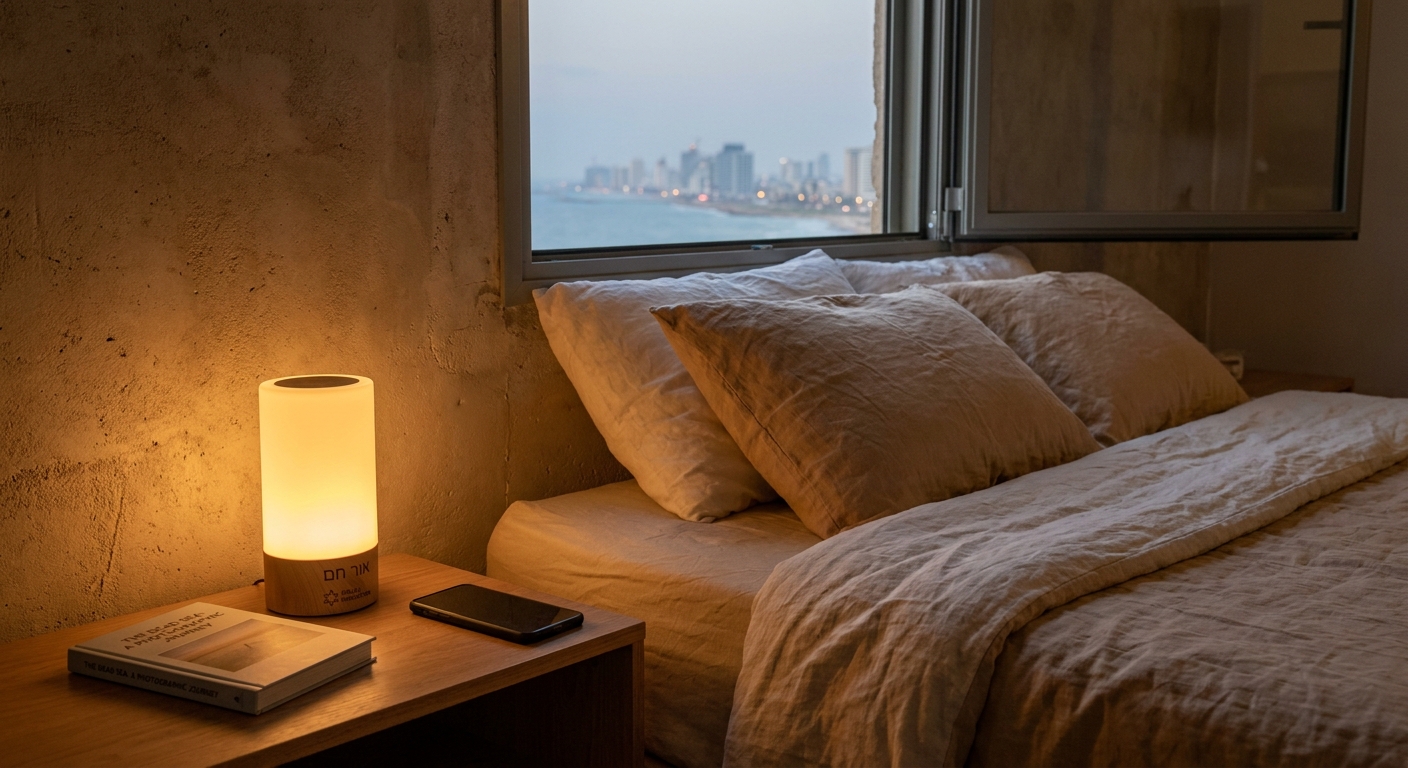
If your brain feels louder at bedtime lately, you are not imagining it. A lot of people are doing the same thing right now. One last headline. One more message. One quick check before sleep. Then the phone goes dark, but your nervous system does not. You lie there tired, yet oddly alert, like your body missed the memo that the day is over. That is why the rise of the Israeli sleep tech smart lamp feels so timely. These are not just prettier bedside lights or another generic sunrise alarm with a bland app. Many of the small makers coming out of places like Sderot and other Israeli workshops are building lamps that focus on nervous system calm, softer evening light, screen free wind down cues, and routines that feel closer to real life in Israel, including quiet, Shabbat-like transitions that help signal safety and rest at home.
⚡ In a Hurry? Key Takeaways
- Israeli sleep tech smart lamps are designed to calm overstimulated evenings with warm light, guided dimming, and low-screen bedtime habits.
- Use one 30 to 60 minutes before bed, dim your room, put your phone out of reach, and let the lamp become your nightly shut-down signal.
- They are not a cure for anxiety or insomnia, but they can be a useful, shippable tool that supports better sleep while also backing small Israeli makers.
Why these lamps are getting attention now
People are not just sleeping less. They are winding down badly.
That matters. Sleep is not only about the number of hours you spend in bed. It is also about how your body gets there. If your last hour before sleep is bright screens, stressful news, and random notifications, your brain stays on watch. You may technically stop scrolling, but your body is still braced.
That is where a good lamp can do more than a sleep app. Light is one of the strongest signals your body uses to figure out whether it is time to be alert or time to let go. Many Israeli makers have taken that idea and built products that feel less clinical and more human.
What makes an Israeli sleep tech smart lamp different
The best ones tend to mix three things. First, warmer light that gets softer as the evening goes on. Second, simple routines that do not drag you back onto your phone. Third, design that feels calm in a real bedroom, not like medical gear sitting on your nightstand.
1. Warm light instead of harsh blue-white light
Bright cool light can tell your brain to stay awake. A smart sleep lamp flips that script. It shifts toward amber or sunset tones in the evening. That feels gentler on the eyes and gives your body a clearer hint that the active part of the day is ending.
2. Wind-down cues you can actually stick with
The real magic is routine. A lamp that starts dimming at the same time every night can become a cue, much like lighting candles or lowering the house noise before Shabbat. It is not about pretending life is peaceful. It is about giving your nervous system one predictable signal in a day that may not feel very predictable.
3. Less dependence on apps and screens
This is a big one. Many people buy sleep tech, then end up poking through settings at 11:30 p.m. on a bright screen. That defeats the point. The smarter Israeli designs try to keep controls simple, with presets, touch controls, or scheduled modes that work quietly in the background.
Why Sderot and other small Israeli workshops matter here
There is something especially meaningful about sleep products built by people who understand stress up close. Makers in places like Sderot know what it means to build comfort that is practical, not precious. That often shows up in products that favor gentle routines, durable build quality, and a sense of emotional reality over glossy marketing promises.
In plain English, these lamps are not selling a fantasy life. They are trying to help you sleep in the life you actually have.
How to use one without overcomplicating it
You do not need a biohacking checklist.
Start with a 45-minute wind-down block
Set the lamp to begin dimming about 45 minutes before bed. During that time, stop checking alerts unless something is genuinely urgent. Keep the room quiet. If you like, stack the habit with something familiar: tea, a chapter of a book, soft music, or a short prayer.
Move your phone away from the bed
If your lamp is doing its job but your phone is still glowing beside your pillow, the phone will win more often than not. Charge it across the room if you can.
Use the lamp every night, not only on stressful nights
Consistency matters more than intensity. Your body learns patterns. The more often the same soft light shows up at the same hour, the more strongly your brain starts to connect it with sleep.
What to look for before you buy
Not every smart lamp deserves a place on your nightstand. Here is what matters most.
Adjustable warmth and brightness
Look for light that can get truly warm and truly dim. If the lowest setting still feels like overhead kitchen light, skip it.
Easy controls
If setup needs three accounts, two apps, and a firmware update at midnight, that is not sleep tech. That is homework.
Preset routines
A good bedtime lamp should let you save a wind-down mode and forget about it.
Low-glare design
You want soft spread, not a spotlight in the face. Lamps with diffused shades or indirect lighting tend to feel much better in bedrooms.
Pair it with other screen-light fixes
If this idea sounds familiar, it should. A bedtime lamp works best as part of a bigger low-screen routine. If you want to go a step further, our piece From Tel Aviv Labs to Your Nightstand: The New Israeli ‘No‑Screens Sleep Pods’ Turning Blue Light Zombies Back Into Deep Sleepers digs into another approach that helps people step away from late-night device overload.
What these lamps can and cannot do
They can help create better conditions for sleep. They can lower visual stimulation, support a calmer routine, and make bedtime feel less abrupt.
They cannot fix severe insomnia, trauma, panic, or medical sleep disorders on their own. If your sleep is falling apart for weeks at a time, or anxiety is hitting hard at night, it is worth speaking with a doctor or mental health professional. A lamp is a tool, not a miracle.
Who will benefit most
These lamps make the most sense for people who:
- scroll late and struggle to switch off
- want less screen use before bed
- find generic sleep gadgets too sterile or disconnected from daily life
- like the idea of a calmer, ritual-based evening rhythm
- want to support Israeli small makers while buying something useful
At a Glance: Comparison
| Feature/Aspect | Details | Verdict |
|---|---|---|
| Evening light quality | Warm, dimmable amber tones are easier on tired eyes than bright cool white light. | Worth prioritizing |
| Ease of use | Simple presets and touch controls help you avoid bedtime app fiddling. | More important than fancy extras |
| Emotional fit | Israeli-built designs often feel more grounded in real stress and ritual-based calming habits. | A meaningful plus for many buyers |
Conclusion
For a lot of people right now, better sleep is not about chasing perfection. It is about getting one small piece of the night back. An Israeli sleep tech smart lamp can help do that by turning bedtime into a gentler process instead of a hard crash from news, alerts, and overthinking. That makes this especially useful for the IsraSale community today. People are carrying fresh stress from the latest headlines and need practical ways to unwind at home without pretending the world is fine. When you choose Israeli-built sleep tech that mixes science, soft design, and Shabbat-like wind-down habits, you get a simple tool that can help you feel safer, sleep deeper, and support small Israeli makers at the same time.