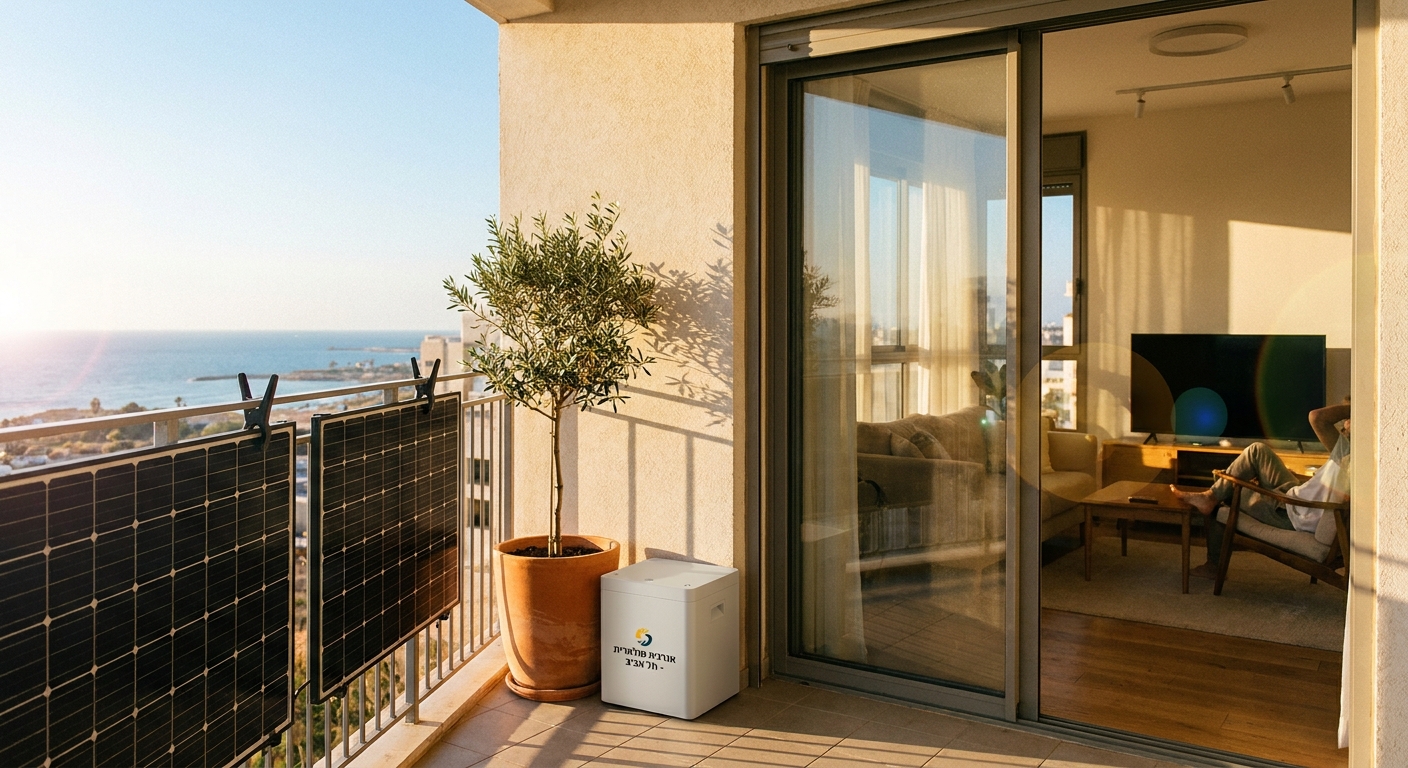
You do not need another vague promise about “the future of energy.” You need something that works when the air is heavy, the grid is strained, and your phone battery is already sliding into the red. That is why the idea behind the new Israeli home solar battery backup is getting attention right now. It is simple. Capture solar power, store it in a compact battery hub, and keep the basics running when the lights go out.
What makes this story useful is that Israelis have been building for resilience for years. In a country where heat, security risks, and infrastructure pressure are all real, energy gear is not treated like a toy for early adopters. It is treated like home insurance you can plug in. The result is a growing category of apartment-friendly and house-friendly energy hubs that can power Wi-Fi, phones, lights, medical gear, and sometimes even a fridge, without requiring a giant off-grid cabin or a six-figure renovation.
⚡ In a Hurry? Key Takeaways
- Israeli home solar battery backup systems are real, practical power hubs that store solar energy and keep essentials running during outages.
- If you live in an apartment or townhouse, start by sizing a system for your must-have devices only, such as lights, router, phones, and one small appliance.
- Check battery chemistry, safety certifications, and transfer-switch setup before you buy. A good backup should feel boring, quiet, and dependable.
What is a “grid-free energy hub,” really?
Strip away the marketing language and it is basically this. A battery. An inverter. Charge controls. Smart software. Sometimes portable solar panels. Sometimes rooftop input. All packed into one system that stores electricity and gives it back when you need it.
Think of it as a smarter, cleaner cousin to the old gas generator. No fuel cans. No pull cord. No fumes outside the window. You charge it from the wall, from solar, or both. When the grid fails, the unit becomes your personal mini power station.
That is the heart of the Israeli home solar battery backup category. It is not about abandoning the grid forever. It is about not being helpless when the grid has a bad day.
Why Israeli systems matter right now
Israel has become very good at practical survival tech. Not because it sounds trendy, but because real pressure tends to produce useful design. Products built there often start with one question. What still has to work when things get messy?
That mindset shows up in energy. Solar fields in the Negev help at the utility scale, but the more personal story is what happens next. The same national push toward energy resilience has helped inspire smaller systems for homes, apartments, balconies, and emergency kits.
For readers in New York, Paris, Toronto, or anywhere else dealing with heat waves and power worries, that matters. These products are not fantasy gadgets. They are shaped by people who assume outages and disruptions are possible, then build backward from there.
What these home systems can actually power
This is where a lot of people get disappointed, so let us be honest.
A compact backup hub usually will not run your whole house, central air, electric oven, and laundry room for two days. That is not the point. The point is to protect the things that matter most.
Good use cases
Most apartment-scale systems are great for:
- Wi-Fi router and modem
- Phone and laptop charging
- LED lamps
- CPAP machines
- Small fans
- Portable medical devices
- Mini fridge or standard fridge for limited periods, depending on battery size
Less realistic use cases
They are usually not ideal for:
- Whole-home air conditioning
- Electric water heaters
- Large space heaters
- Ovens and stovetops
- Dryers
If you size your expectations right, these systems feel amazing. If you expect them to replace a utility company, you will be frustrated.
Why this feels different from old-school backup power
Traditional backup used to mean one of two things. Either you bought a noisy generator and dealt with fuel, or you paid a lot for a large home battery installation. There was not much in the middle.
Now there is. The new middle category is what makes the Israeli home solar battery backup story interesting. These hubs are often modular, meaning you can start smaller and add storage later. Many come with app-based controls, charge scheduling, and solar input options that make sense for normal households.
It is the same sort of shift we are seeing in other battery tech too. If you read From Tel Aviv Labs to Your Charging Cable: The New Israeli ‘5‑Minute Phone Battery’ That’s Suddenly Real, you have already seen how Israeli engineers are taking batteries out of the lab and making them feel useful in everyday life. Home backup is the bigger, calmer version of that same idea.
Who should consider one first
You do not need to be a prepper. You just need one of these situations:
- You live somewhere with summer brownouts or winter outages.
- You work from home and your income depends on staying connected.
- You care for kids, older parents, or someone with medical equipment.
- You live in an apartment and cannot install a generator.
- You want lower stress during emergency alerts, storms, or grid strain.
That last one matters more than people admit. Sometimes the value is not only the electricity. It is the feeling that when everyone else starts hunting for candles, you already have a plan.
How to shop without getting lost
This market gets confusing fast because brands throw around big numbers. Focus on the practical questions instead.
1. Start with your “must-run” list
Write down what you actually need during an outage. Not your dream list. Your real list.
For example:
- Wi-Fi router for 8 hours
- 2 phones
- 1 laptop
- 4 LED lights
- Small fan or CPAP overnight
That tells you much more than a random battery ad ever will.
2. Look at watt-hours, not hype
Battery storage is usually measured in watt-hours or kilowatt-hours. More watt-hours means more runtime. If a company only talks about “peace of mind” and not capacity, keep moving.
3. Check the output ports
Do you need standard wall outlets, USB-C, DC ports, or all three? A great battery that cannot plug into your essentials is not great.
4. Understand solar input
Some units can charge from foldable panels on a balcony or terrace. Others are better paired with a proper rooftop setup. If you rent, this is a big deal. Ask what kind of panels are supported and how long recharge takes in real sunlight, not brochure sunlight.
5. Ask about pass-through and automatic switchover
The nicest systems can sit there quietly, charging and waiting, then take over quickly when the power drops. That matters for routers, work gear, and medical devices.
Apartment-friendly does not mean toy-sized
One of the smartest things about this product category is that it respects how many people actually live. Not everyone has a garage, a shed, or a detached house. A lot of people have a hallway closet, a utility corner, or a balcony.
That is why compact design matters. Wheelable power stations, stackable batteries, and tidy cable management are not just cosmetic features. They are what make the system usable in the real world.
If you are in a city apartment, a well-chosen backup hub can still cover your communications, lights, and small essentials. That may not sound dramatic until the first blackout hits and your building lobby is dark.
Safety matters more than speed
This is electricity sitting inside your home, so boring is good. Safe is better.
What to check
- Battery chemistry, with lithium iron phosphate often favored for durability and safety
- Recognized safety certifications for your market
- Built-in temperature management
- Overcharge and short-circuit protection
- Clear guidance on indoor use and ventilation
Also, if you want a system tied into home circuits, do not improvise. Use a licensed electrician. Portable plug-in use is one thing. Backfeeding a house panel the wrong way is dangerous.
Will it save money, or is this mostly about backup?
For many buyers, backup is the main reason. The payoff is security. But some systems can also help with everyday energy use.
If your unit can charge when power is cheaper and discharge during peak rates, it may trim your bill. If it uses solar charging well, that helps too. Still, it is best to think of bill savings as a bonus, not the only reason to buy.
The real value is resilience. Your internet stays on. Your fridge stays cold longer. Your family stays calmer.
What a smart first setup looks like
If you are curious but cautious, here is a sane way to begin:
- Buy a battery hub sized for one evening or one overnight outage.
- Test it with your router, phones, lights, and one key device.
- Add portable solar input if you have reliable sun exposure.
- Use it for camping, road trips, or outdoor work too, so it is not sitting idle all year.
That is how normal people adopt this stuff. Not all at once. One useful layer at a time.
At a Glance: Comparison
| Feature/Aspect | Details | Verdict |
|---|---|---|
| Best fit | Apartment or small-home users who need backup for essentials, not whole-home luxury power | Very practical for real-life outages |
| Power source | Charges from wall power, solar panels, or both, depending on the model | Flexible and cleaner than fuel generators |
| Main trade-off | Compact systems are quiet and easy to live with, but they cannot run every heavy appliance for long | Worth it if you size for essentials first |
Conclusion
Energy security is back in the headlines because people are worried, not because they suddenly became hobbyists. Heat waves, grid strain, and blackout talk make this feel personal fast. That is why the rise of the Israeli home solar battery backup category is worth your attention. It takes a giant problem and turns it into something concrete. A box, a battery, a few panels, a working router, cold medicine in the fridge, lights when the building goes dark. Israelis living with constant infrastructure stress have learned to design for resilience, and those same ideas can help families far from the Negev. You do not need to become fully off-grid tomorrow. You just need one smart layer of backup that gives you more independence, more calm, and one less thing to panic about when the power flickers.