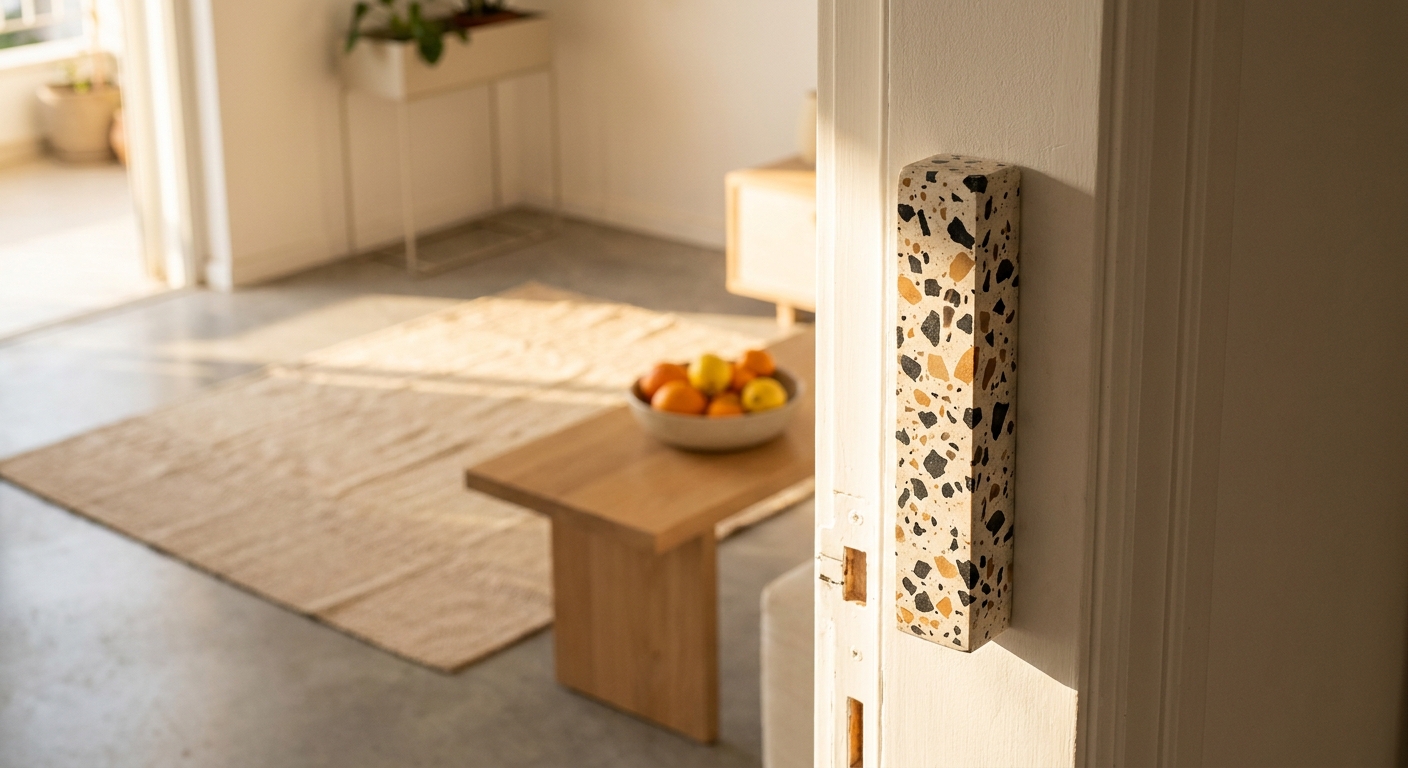
You know the feeling. You want a mezuzah that says something real about your home and your values, and all you find are the same polished, factory-made cases copied a hundred times over. They are fine. They are just not memorable. If you are looking for an Israeli Bauhaus mezuzah, the good news is that a small wave of Israeli designers is making Judaica that feels fresh, local, and deeply rooted at the same time. Think clean Bauhaus lines, honest materials, and stones with a direct link to the land itself, like Golan basalt and Sinai stone. These are not souvenir-shop pieces. They are objects with weight, texture, and a story. Better yet, they give buyers outside Israel a practical way to support Israeli makers directly, especially at a time when many people want their purchases to reflect both taste and principle. A mezuzah can be small. It can still make a statement.
⚡ In a Hurry? Key Takeaways
- A true Israeli Bauhaus mezuzah stands out through simple geometric design, local materials, and direct studio craftsmanship.
- Look for makers using Golan basalt, Sinai stone, hand-finished metal, or small-batch wood, and ask where the piece is designed and made.
- Check that the mezuzah fits a kosher scroll size you can source easily, and make sure the mounting method suits your doorframe before ordering.
Why these mezuzot feel different
Bauhaus design gets talked about a lot, sometimes too loosely. In plain English, it means stripping away extra decoration and letting shape, proportion, and material do the work.
That style has a natural home in Israel. Tel Aviv’s Bauhaus buildings made that visual language familiar long ago. Now some Israeli studios are bringing the same thinking into Judaica. The result is a mezuzah that feels modern without feeling cold.
Instead of ornate swirls or generic silver plating, you get quiet geometry. A slim vertical block. A clean cut in basalt. A carved letter shin that feels placed, not pasted on. It is a design statement, yes, but not a loud one.
What makes an Israeli Bauhaus mezuzah worth seeking out
Local material with a real sense of place
This is where the story becomes more than marketing. Golan basalt has a dark, volcanic texture that looks dramatic but not flashy. Sinai stone tends to be lighter, softer-looking, and architectural. When a mezuzah is made from one of these materials, it does not just look Israeli. It carries the landscape into the object itself.
That matters if you want something you can actually talk about when guests notice it. “I bought this from a small Israeli studio that works with basalt from the Golan” is a very different sentence from “I found it online and it shipped in two days.”
Small-batch design instead of catalog sameness
Mass-produced Judaica often aims to be broadly acceptable. That usually means safe, familiar, and forgettable. Boutique Israeli studios can take more risks. They can make a design sharper, simpler, heavier, or more architectural because they are not trying to please every gift shop buyer.
That small-batch approach also means slight variation. In stone, especially, that is a good thing. Tiny shifts in grain, color, and finish make each mezuzah feel less like stock and more like a crafted object.
A modern look that still respects tradition
A mezuzah is not just décor. It has a halachic and emotional role. Good contemporary makers understand that. The best designs update the exterior while respecting the purpose inside.
That means the case should protect the scroll, fit the proper klaf size, and mount securely. Beauty should not come at the expense of function.
How to shop without getting fooled by nice photos
This is the part many buyers miss. “Designed in Israel” and “made in Israel” are not always the same thing.
If you want the real thing, ask a few basic questions:
1. Where is it actually made?
Some sellers use Israeli branding for products manufactured elsewhere. There is nothing automatically wrong with that, but if your goal is to support Israeli makers, ask directly whether the mezuzah is produced in an Israeli studio or workshop.
2. What material is it really?
“Stone look” is not stone. “Basalt finish” is not basalt. Product descriptions should clearly say whether the piece is carved stone, cast composite, powder-coated metal, solid wood, or ceramic.
3. What scroll size does it hold?
This is the practical question that saves headaches later. Mezuzot can look roomy in photos and still fit only a very small scroll. Check the exact internal capacity. If you already own a scroll, measure it. If not, buy the scroll size first or at least plan them together.
4. How does it mount?
Stone mezuzot can be heavier than standard cases. Some mount with strong adhesive. Others need screws. If you are placing one on an outdoor frame or textured surface, this matters a lot.
Who these mezuzot are perfect for
Not every home needs the same style, and that is fine. But an Israeli Bauhaus mezuzah is especially appealing for a few types of buyers.
The person tired of gift-shop Judaica
If you have looked at ten mezuzot and felt nothing, this category may be exactly what you want. It feels curated, not churned out.
The buyer who wants to support Israel in a direct, practical way
For many people, “buy Israeli” can feel abstract until there is a product that is both meaningful and easy to ship. A mezuzah checks both boxes. It is small, useful, symbolic, and personal.
The homeowner who cares about design
If your shelves, lighting, and furniture are chosen carefully, a random mezuzah on the doorframe can feel like an afterthought. These pieces let the ritual object match the rest of the home.
What to expect on price
You will usually pay more than you would for a mass-market mezuzah, and that makes sense. Natural stone, hand-finishing, small-batch production, and overseas shipping all add cost.
But this is one of those purchases where the upgrade is visible. You are not paying for fancy packaging. You are paying for material, design, and origin.
As a rough guide, boutique studio mezuzot often land in the “special housewarming gift” range rather than the “grab one at checkout” range. For many buyers, that is the point. It turns a routine item into something lasting.
Best ways to find them
The quiet surge in Israeli design does not always show up in the usual big retail channels. You may have better luck looking in places that feel a bit more personal.
Boutique studio sites
This is often the best option if you want the widest selection and the clearest story about the maker.
Israeli design markets and pop-ups
Many designers first sell through local markets, museum shops, and holiday pop-ups before expanding online.
Curated Judaica shops with maker profiles
The good ones will tell you who made the piece, what it is made from, and where it ships from. If a site is vague about all three, keep moving.
How to choose the right one for your home
Start with your doorway, not the product photo. A dramatic black basalt mezuzah may look stunning on a pale stone or white frame. On a dark metal doorframe, it may disappear.
Then think about mood. Do you want something architectural and crisp, or warmer and more tactile? Sinai stone can feel softer and more natural. Basalt often feels bolder and more graphic.
Finally, think about where it will live. Outdoor placement calls for durable finishes and secure mounting. Indoor placement gives you more freedom to choose for pure looks.
The bigger story behind the object
What makes this trend worth noticing is not just style. It is the fact that some of the most interesting Israeli design is happening below the radar, in small studios rather than giant brands.
That means many buyers never see it. They assume “Israeli-made” means the same giftware they have seen for years. It does not. There is a new generation of makers using architecture, landscape, and modern industrial design to create Judaica that feels current and rooted at once.
When you buy one of these mezuzot, you are not just filling a ritual need. You are voting for that design ecosystem to keep going.
At a Glance: Comparison
| Feature/Aspect | Details | Verdict |
|---|---|---|
| Design style | Clean Bauhaus lines, minimal ornament, strong geometric presence | Best for modern homes and buyers who want understated elegance |
| Materials | Golan basalt, Sinai stone, hand-finished metal, or small-batch wood | Worth paying more for if you want texture, authenticity, and a real Israel connection |
| Buying practicalities | Check scroll size, actual country of manufacture, mounting method, and outdoor suitability | Do a quick spec check before buying to avoid expensive mistakes |
Conclusion
If you have been waiting for a mezuzah that feels personal instead of generic, this is a good moment to look again. Right now there is a quiet surge of Israeli product design that most people will never see, because it lives in boutique studios and shuk pop-ups rather than big box stores. Spotlighting Bauhaus-inspired mezuzot crafted from Golan basalt and Sinai stone gives our community a concrete, shippable way to support Israeli makers, answer boycotts with buy Israeli choices, and upgrade our homes with objects that are both spiritually meaningful and genuinely world-class design. Small object. Big message. That is a combination worth putting on your door.