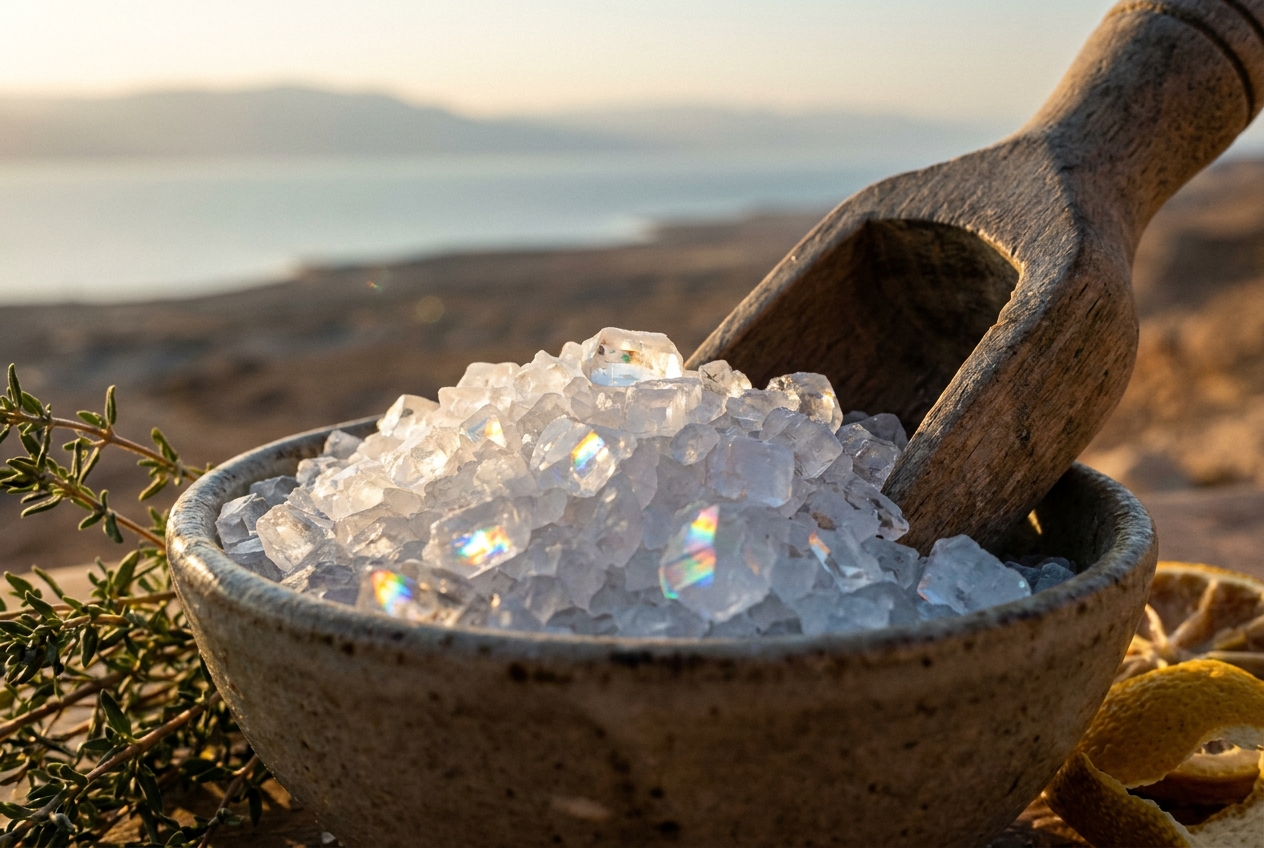
You have probably stood in the grocery aisle staring at a wall of fancy salts and thinking, “Fine, but what am I actually paying for?” That frustration is fair. A lot of premium salts come wrapped in pretty branding and vague claims about minerals, purity, and sustainability, while telling you almost nothing useful about where they came from. That is why Israeli solar sea salt from the Dead Sea region is getting attention. It offers something most “Mediterranean” labels do not. A real place. A clear harvesting method. And a product that feels special without needing a luxury-marketing speech to justify itself. The appeal is simple. Salt pans in the Judean Desert use intense sun and dry air to help evaporate water naturally, which means very little outside energy is needed. For home cooks, that turns an everyday ingredient into a small ritual. You season dinner, and you also know what is in your hand, where it came from, and why it may be worth the switch.
⚡ In a Hurry? Key Takeaways
- Israeli solar sea salt from the Dead Sea region stands out because it is traceable, mineral rich, and harvested mainly through sun-driven evaporation.
- Check the label for exact origin, harvesting method, grain size, and whether anti-caking agents or additives were used.
- It can be a smart value buy if you use it as a finishing salt, but it is still salt, so enjoy the flavor without treating it like a health miracle.
Why this salt feels different from the usual “premium” stuff
Most people are not looking for a lecture from their seasoning. They just want ingredients that are honest. That is the big draw here.
Israeli solar sea salt from the Dead Sea region connects your kitchen to a specific landscape. The Judean Desert is hot, dry, and bright for much of the year. Those conditions make solar evaporation practical, which means water can be reduced naturally in salt pans instead of relying heavily on industrial energy input.
That does not automatically make every crystal superior. It does mean the story on the package can be backed up by geography and process, not just branding language.
What “solar sea salt” actually means
The term sounds fancy, but the idea is refreshingly low-tech.
Sun and time do the heavy lifting
Solar sea salt is typically made by moving salty water into shallow ponds or pans and letting sun and wind evaporate the water. As the water level drops, salt crystals form and can be collected.
In a region like the Judean Desert, that method makes a lot of sense. There is abundant sunlight, low humidity, and a long history of salt production tied to the area.
Why people see it as cleaner and more sustainable
Compared with highly energy-intensive processing, solar harvesting can use very little outside power. That is attractive if you are trying to make small buying choices that line up with your values.
It also tends to appeal to shoppers who are tired of greenwashing. If a brand can clearly say where the salt was harvested and how it was dried, that is more useful than a generic “natural” label.
What the Dead Sea region adds to the story
The Dead Sea has a strong identity. People associate it with mineral content, ancient history, and the desert environment. That gives this salt emotional appeal, yes, but also practical interest.
Many shoppers want flavor with a sense of place. Wine has that. Olive oil has that. Salt can too.
When a product is sold as Israeli solar sea salt from the Dead Sea region, the best versions offer traceability. That matters more than romantic wording. Look for specifics, not mood lighting in a package.
Is it actually better for you?
This is where it helps to stay grounded.
Mineral rich does not mean magic
Unrefined or minimally processed salts can contain trace minerals that standard table salt may not emphasize. Some people also prefer the taste and texture, especially as a finishing salt on vegetables, fish, eggs, or fresh bread.
But salt is still salt. You are not buying a superfood. You are buying a seasoning with possible trace minerals, a different texture, and a more transparent sourcing story.
Watch the iodine question
If your household relies heavily on iodized table salt for iodine intake, switching completely to a specialty salt may not be ideal unless you get iodine elsewhere in your diet. This is especially worth noting for families, pregnant women, or anyone with specific nutritional concerns.
So yes, enjoy the upgrade. Just do not confuse “natural” with “nutritionally complete.”
How it tastes in real cooking
This is the part that matters at dinner.
Good solar sea salt often has a crisp texture and a cleaner, more rounded salinity than standard table salt. That can make a simple tomato salad taste more vivid. It can also add a subtle crunch on roasted potatoes or grilled chicken.
If you use it by the pinch at the end of cooking, you will likely notice it more. If you dump it into pasta water, the difference may be less dramatic and your expensive jar will disappear fast.
Best uses
Use it as a finishing salt for:
- Roasted vegetables
- Fresh cucumber and tomato salads
- Hummus and labneh
- Fish and grilled meats
- Chocolate desserts or caramel
How to shop without falling for hype
This is where a little label-reading saves money.
Look for exact origin
If the front says “Mediterranean” but the back says almost nothing, be suspicious. A good product should name the region clearly, ideally the Dead Sea region or Judean Desert salt pans, not just toss around broad geography.
Check ingredients
The cleanest option is simple. Salt. Maybe that is it. If there are anti-caking agents or additives, that is not always a deal-breaker, but it is worth knowing.
Match grain size to how you cook
Fine grain works better for daily seasoning. Coarse crystals are great for finishing and for salt grinders. Buying the wrong grain size is one of the easiest ways to end up disappointed.
Compare price by weight
Fancy packaging can quietly double the cost. Check the price per ounce or gram. Often the most sensible choice is a refill pouch or larger bag, then transfer it into a nice jar at home.
Why this small kitchen upgrade matters right now
People are worn out on buying more gadgets. Fair enough. Most of us do not need another device on the counter. We want small upgrades that we actually use every day.
This is one of those. A traceable salt with a clear origin and low-energy harvesting method feels tangible. You can start using it tonight. No app. No charging cable. No setup screen.
That is part of the appeal. It is not abstract. It is a simple pantry switch that brings together flavor, transparency, and a lighter environmental footprint in a way people can understand.
At a Glance: Comparison
| Feature/Aspect | Details | Verdict |
|---|---|---|
| Origin transparency | Better products clearly state Israeli origin, Dead Sea region sourcing, and solar evaporation methods. | A strong reason to choose it over vague “Mediterranean salt” labels. |
| Taste and texture | Often crisp, clean, and better suited for finishing dishes than ordinary table salt. | Worth it if flavor and texture matter to you. |
| Health and sustainability | May contain trace minerals and can be harvested with very low outside energy use, but it is still sodium and not a cure-all. | Good everyday upgrade, just keep expectations realistic. |
Conclusion
If you are tired of paying extra for salts that hide behind soft-focus marketing, this is a more satisfying option. Israeli solar sea salt from the Dead Sea region gives you something concrete. A real origin. A simple harvesting method. A product that can make dinner feel a bit more thoughtful without becoming a lifestyle performance. That matters right now because people want daily upgrades that are useful, affordable, and honest. A clean, mineral rich, traceable salt harvested with almost no energy use is an easy way to bring your values into the kitchen tonight. Not with a giant overhaul. Just with one small jar that earns its space on the table.