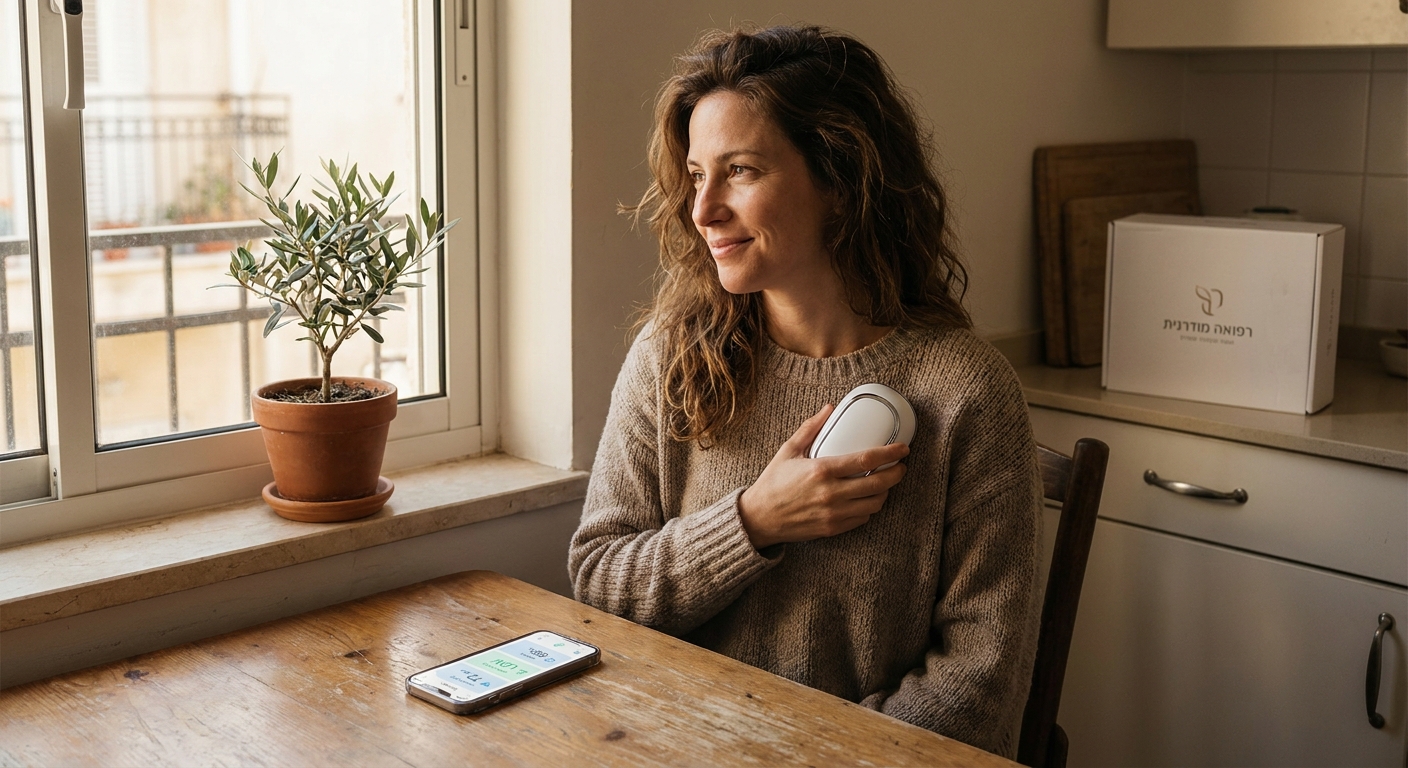
You know the drill. You mean to book the check-up. Then work runs late, a child gets sick, the week disappears, and that little worry in the back of your mind stays there. For a lot of people, the only health routine that has a real chance of happening is one that takes less than a minute at home. That is why the new wave of Israeli AI health scanner devices matters. Not because it sounds futuristic, but because some of these tools can turn 30 seconds of breathing, a fingertip reading, or a quick chest placement into something much more useful than guesswork. They are not magic. They do not replace your doctor. But the best ones can help you spot patterns earlier, decide when a symptom is worth acting on, and walk into a real appointment with actual data instead of a foggy memory of “I felt off sometime last week.”
⚡ In a Hurry? Key Takeaways
- The most useful Israeli AI health scanner devices for home use today focus on heart rhythm, lungs, oxygen, and short spot checks you can do in under a minute.
- If you want one device that is easy to start with, look for a pocket ECG or smart stethoscope style tool with app-based trend tracking and clear doctor-sharing features.
- These gadgets are best for early signals and ongoing trends, not emergency diagnosis. Chest pain, fainting, severe shortness of breath, or stroke symptoms still mean urgent care now.
Why this matters right now
Israeli hospitals, university labs, and med-tech companies have been busy pushing health tools closer to the home. You can see the bigger pattern. Better sensors. Smarter software. More testing that happens outside the clinic.
That macro story is nice, but most people do not need a policy briefing. They need an answer to a simple question. What can I actually buy today that might help me catch something earlier?
That is where the Israeli AI health scanner category gets interesting. A good device in this space does three things well. It gathers a signal quickly. It explains the result in plain language. It helps you track changes over time.
What counts as an “AI health scanner” in your pocket?
Let’s keep this simple. We are not talking about sci-fi tricorders. We are talking about compact consumer or near-consumer devices that use sensors plus software to look for patterns in your body.
That can include:
- Portable ECG devices that check heart rhythm
- Smart stethoscope tools that record heart or lung sounds
- Pulse oximeter style devices with smarter analysis
- Wearable patches that watch for ongoing changes
- Phone-based breathing or vital sign tools that guide you through a short scan
The “AI” part usually means the software helps classify, flag, compare, or trend what the sensor sees. Sometimes that means warning you about a possible irregular rhythm. Sometimes it means spotting breathing changes or helping clinicians review data faster.
The most credible Israeli pocket health scanners to watch
1. Pocket ECG devices for heart rhythm checks
If your main worry is heart flutters, skipped beats, or family history, this is the most practical starting point. Israel has been especially strong in digital cardiology, and that shows up in small ECG tools that can capture a quick rhythm strip at home.
These devices usually work by placing fingers on sensors or attaching a small unit to the chest. In about 30 seconds, the app records an ECG, checks for signs of irregular rhythm, and stores the reading.
Why people like them:
- Fast and easy to repeat
- Useful for symptoms that come and go
- Much better than trying to describe a flutter from memory
- Often easy to send to a doctor
Best use case. You occasionally feel palpitations, mild dizziness, or a racing heartbeat, and you want to know whether there is a pattern worth discussing.
2. Smart stethoscope style devices for heart and lung listening
This is where the phrase Israeli AI health scanner starts to feel very literal. Some compact devices let you place a sensor on the chest or back and capture heart or lung sounds at home. The software may help clean up background noise, compare recordings, or flag signals that deserve review.
This can be especially useful if your concern is breathing, cough recovery, wheezing, or ongoing monitoring after illness.
Best use case. You want a clearer picture of whether your breathing sounds are changing over several days, especially if getting an in-person appointment takes time.
3. Smart patches and wearable monitoring
Some of the best health tech is not flashy at all. It is a patch. Stick it on, wear it, and let it gather data while you go about your day. Israeli med-tech has done serious work in remote monitoring, and patches are a big part of that story.
These are useful because many symptoms do not show up during a 30-second spot check. A patch can catch trends in heart rate, rhythm, movement, or breathing over a longer period.
Best use case. Your symptoms are inconsistent, or your doctor wants more than a one-time reading.
What to look for before you buy
Clear purpose beats lots of features
Do not buy a device because it claims to check “everything.” Start with the one problem you actually care about. Heart rhythm. Breathing. Oxygen. Recovery after illness. Pick the tool that matches the job.
Real clinical grounding
This part matters. Fancy app design means nothing if the device is not built on serious clinical work. Look for products that mention clinical studies, regulatory clearance where relevant, and partnerships with hospitals or recognized medical centers.
That is one reason Israeli devices draw attention. Many come out of ecosystems tied closely to hospitals, engineers, and research teams rather than pure consumer gadget marketing.
Easy reports you can share
The best reading in the world is not very useful if it stays trapped in an app. Make sure you can export a PDF, send a rhythm strip, or show trend charts clearly.
Low-friction use
If it takes ten steps every time, you will stop using it. The sweet spot is something you can do while waiting for the kettle to boil.
Where Israeli health tech has already shown this can work
We have seen this same home-first logic in other areas too. A good example is From Ramat Gan Ultrasound Lab to Your Couch: The Israeli Home Pregnancy Scanner Quietly Rewriting Prenatal Care In America. Different device, same core idea. Take a test that used to demand a clinic visit, make it simpler, guide the user properly, and give families faster clarity at home.
That does not mean home tools replace doctors. It means they can cut down on blind waiting, missed patterns, and needless uncertainty between appointments.
What these scanners are genuinely good at
Let’s give them credit without overselling them.
- They help you catch changes earlier than you might otherwise notice.
- They turn vague symptoms into trackable data.
- They can reduce the “maybe it is nothing” delay.
- They help doctors see a timeline instead of one-off anecdotes.
- They can be especially helpful for busy parents, older adults, and people managing chronic issues.
For many readers, that alone is enough. Not instant diagnosis. Just more clarity, sooner.
What they are not good at
This is the part marketing materials tend to mumble.
- They do not rule out every serious problem.
- They can produce false alarms.
- They may miss issues outside the sensor’s narrow job.
- They are not a replacement for urgent evaluation when symptoms are severe.
If you have crushing chest pain, sudden weakness, fainting, blue lips, severe shortness of breath, or stroke signs, put the gadget down and get urgent help.
A smart buying strategy for normal people
If your worry is your heart
Start with a pocket ECG style device or physician-linked rhythm monitor. You want something that records quickly, labels likely irregular rhythm, and lets you share the strip.
If your worry is breathing
Look for a smart stethoscope or a high-quality oxygen and respiratory monitoring tool with trend history. This is especially useful if symptoms come and go.
If your issue is ongoing monitoring
Ask whether a patch or longer-term wearable makes more sense than a spot-check gadget. One quick reading is helpful. A 24-hour or multi-day pattern can be much better.
If you are nervous but not sure what to buy
Do not start with the most expensive device. Start with the problem you can describe most clearly. “I get palpitations twice a week” is a clearer target than “I want to optimize my wellness.”
At a Glance: Comparison
| Feature/Aspect | Details | Verdict |
|---|---|---|
| Pocket ECG scanner | Usually captures a 30-second heart rhythm reading through finger contact or a small chest-based sensor, then stores and shares results through an app. | Best first buy for palpitations, skipped beats, or family heart history. |
| Smart stethoscope or lung scanner | Records heart or lung sounds and may use software to reduce noise, compare recordings, or flag changes. | Useful for breathing concerns, cough follow-up, or home monitoring between appointments. |
| Wearable patch monitor | Tracks signals over hours or days instead of relying on one short reading, which helps catch inconsistent symptoms. | Best when symptoms are sporadic or your doctor wants a longer picture. |
Conclusion
The promise of the Israeli AI health scanner is not that it turns your phone into a hospital. It is that it gives busy, normal people a better shot at noticing something early enough to act on it. In the last 24 hours, Israeli hospitals and med-tech labs have been in the news again for pushing AI deeper into everyday health, from new implant engineering centers in Haifa to regulatory sandboxes for at-home diagnostics. That is good macro news, but for regular people it only matters if someone translates it into, “What can I buy today that helps me catch a problem earlier, without needing a doctor on speed dial?” The answer is that a small number of credible pocket scanners and smart patches now do exactly that. They fit in a work bag, make sense without a medical degree, and turn vague worry about heart health or breathing into concrete trends you can track. At a time when so many headlines about Israel feel heavy, practical health tech like this is a reminder that support can also look like taking better care of your own body with tools grounded in serious clinical work.