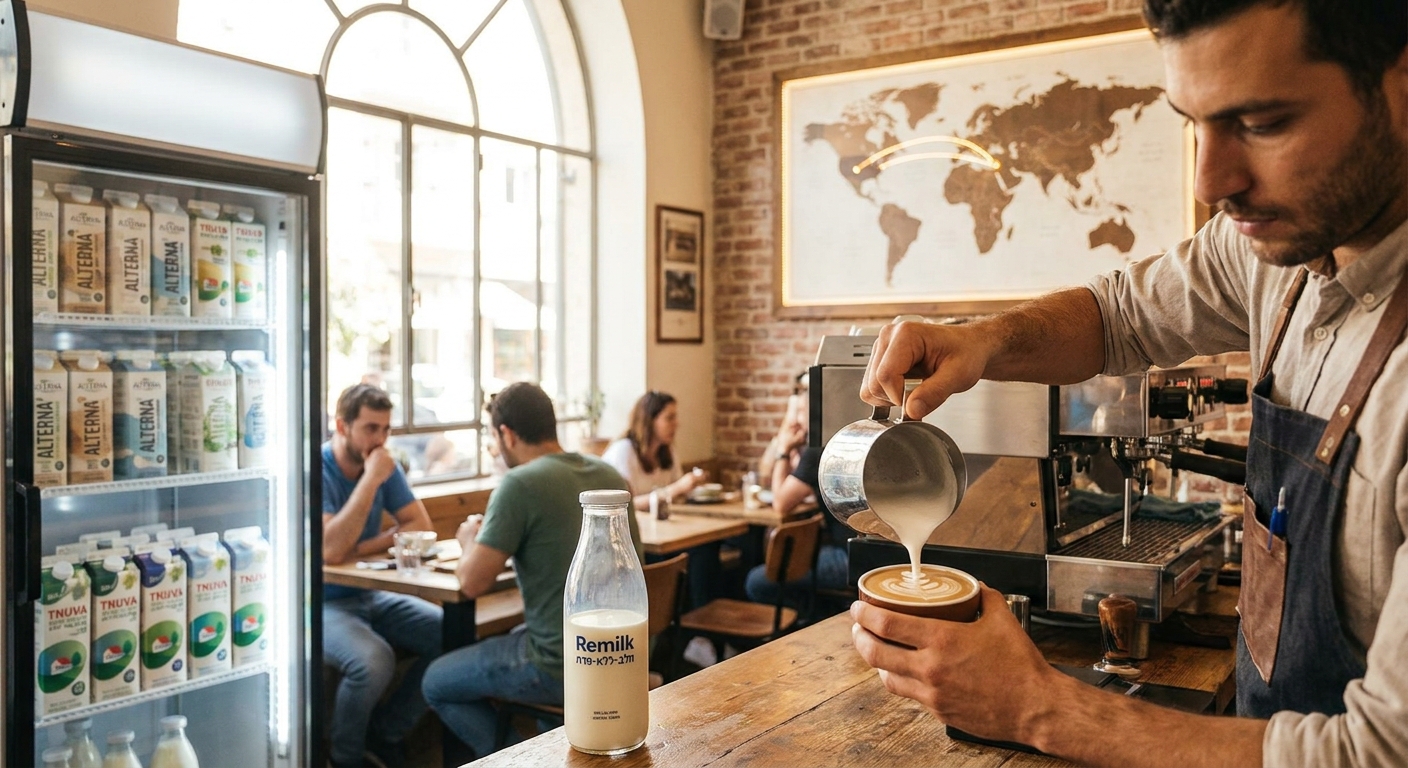
You’re not imagining it. The milk aisle has become weirdly stressful. If you want something healthy, good in coffee, better for the planet, and not tied to industrial animal farming, you usually end up settling. Plant milks can be great, but some are thin, some split in hot drinks, and some are basically expensive water with a wellness label. Regular dairy still works well, but for a lot of shoppers in 2026 it feels out of step with where food is headed. That is why Israeli cow free milk Remilk is getting real attention right now. This is not another vague “future of food” promise. It is milk protein made without cows, using fermentation, and it is moving from headlines into actual products. The important part for regular shoppers is simple. You do not need to become a food scientist to follow this. You just need to know what it is, why Israel is ahead here, and what to watch for as it starts showing up in cafés, restaurants, and eventually US stores.
⚡ In a Hurry? Key Takeaways
- Israeli cow free milk Remilk uses fermentation to make real milk proteins without cows, so it aims to taste and perform more like dairy than most plant milks.
- If you want to try it first, watch cafés, food service menus, and specialty grocers before expecting a big national supermarket rollout.
- It is not the same as almond or oat milk, and people with dairy protein allergies should still read labels carefully because the proteins are designed to be dairy-identical.
What “cow free milk” actually means
Let’s clear up the biggest confusion first. Cow free milk is not squeezed from oats, almonds, peas, or soy. It is also not lab-grown milk from animal cells.
Companies like Remilk use precision fermentation. In plain English, that means they program microflora, often compared to yeast, to produce the same key proteins found in cow’s milk. Those proteins are then mixed with fats, minerals, and water to make milk or dairy products.
The result is meant to behave like dairy because, at the protein level, it is much closer to dairy than plant milk is.
Why that matters in real life
Milk is not just white liquid. Its proteins are what give it structure, foam, stretch, and that familiar mouthfeel. That is why many plant milks struggle with cappuccinos, melting, or cheese texture. If you can make the same core milk proteins without a cow, you get much closer to dairy performance.
That is the promise behind Israeli cow free milk Remilk. Not “milk alternative” as a compromise. More like dairy rebuilt with fermentation instead of farming.
Why Israel is suddenly at the center of this
Israel has been pushing hard in food tech for years, especially in areas where climate pressure, land use, water limits, and food security all collide. Dairy is a perfect example. It is loved by consumers, but traditional production uses a lot of land, feed, water, and animals.
Israeli startups and major food companies saw an opening. If they could make dairy proteins in a cleaner, more controlled way, they would have a product with global demand.
Remilk became one of the names to watch because it focused on the ingredient layer. Instead of only selling a cute consumer carton, it built the core protein platform that can go into milk, cheese, yogurt, and more. That matters because ingredient companies often shape what lands on shelves even if shoppers never see their name first.
Why this moment matters more than older hype cycles
There have been plenty of food tech stories that sounded exciting and then disappeared into pilot programs and investor decks. This feels different for one reason. Regulation is catching up. Fresh approvals and commercial rollouts mean the story is moving out of theory and into buying decisions.
In Israel, fermentation-based dairy products are rolling out now through partnerships with established dairy players. In the US, the path is still about scaling, distribution, pricing, and branding, but this is no longer a science project.
How it compares with plant milk and regular dairy
This is where most shoppers need a straight answer.
Compared with oat, almond, and soy milk
Plant milks can still be excellent. Oat is usually the crowd favorite for coffee. Soy often wins on protein. Almond can be light and pleasant. But they are plant beverages trying to stand in for dairy, each with strengths and tradeoffs.
Fermentation-based milk is trying to copy dairy more closely. That means better odds of getting the taste, texture, foaming, and cooking behavior people miss when they leave cow’s milk behind.
If your biggest complaint with plant milk is “it’s fine, but it’s not really milk,” this category is built for you.
Compared with conventional dairy
Traditional dairy still has the home-field advantage on taste familiarity, price in many regions, and wide availability. But it comes with environmental and animal welfare questions that more shoppers care about every year.
Cow free milk aims to keep the experience while cutting out the cow. That could mean lower land use, lower dependence on livestock, and less exposure to the ethics problems tied to modern dairy farming.
The catch is that early products often cost more at first. That is normal. New food tech almost always starts high and comes down as production scales.
Is it healthy?
The honest answer is, it depends on the final product, just like with any milk.
Do not assume “cow free” automatically means healthier. Check the label. Look for protein, added sugar, saturated fat, calcium, and vitamins. Some products will be designed to match dairy nutrition closely. Others may be built for barista use, desserts, or cheese and won’t be a one-to-one nutrition match.
One important allergy note
This part matters a lot. If a product uses dairy-identical proteins made through fermentation, people with milk protein allergies may still need to avoid it. It may be cow free, but the proteins are not “allergy free” in the way many plant milks are.
If you are lactose intolerant, the picture may be different, because lactose and milk proteins are not the same thing. But labels and brand guidance still matter. Read carefully.
What to look for on labels and menus
You probably will not always see a carton screaming “fermentation milk” in giant letters. The early wave may show up more quietly than that.
Words and phrases to watch for
Keep an eye out for terms like these:
- Animal-free dairy
- Cow-free dairy
- Precision fermented milk protein
- Non-animal whey protein
- Fermentation-based dairy
Some brands may mention Remilk in business-facing materials rather than front-of-pack consumer branding. So if you are a retailer or café owner, ask suppliers what protein platform they use.
Where it may appear first
Do not expect every suburban grocery chain to have a full shelf next week. New food tech usually lands in stages.
- Specialty cafés that care about premium milk texture
- Restaurants testing next-gen sustainability menus
- Upscale grocers and health-focused retailers
- Cheese and dessert products before plain drinking milk in some markets
What to watch specifically with Remilk
Remilk is one of the key names because it has spent years building the production side needed for large-scale dairy proteins without cows. It has also drawn attention because it sits at the intersection of Israeli food tech credibility and real commercial ambition.
For US shoppers, the useful question is not “Can I buy a Remilk carton in every store today?” The better question is “Which products on shelves or menus are likely using this kind of protein soon?”
Watch for partnerships. Watch food service. Watch product launches that talk about animal-free dairy rather than just another oat blend.
For small retailers and café owners
This is your chance to get ahead without overcommitting. Ask distributors and specialty food importers these simple questions:
- Do you carry any fermentation-based dairy products or ingredients?
- Are any made with Israeli technology, including Remilk?
- Do you have barista samples or food service packs?
- What labeling guidance should staff give to allergy-sensitive customers?
If your customers already ask for better non-dairy options, this category could give you something plant milks often do not. Familiar dairy performance without the cow story that turns some shoppers off.
So, is this a gimmick or the next normal?
Probably a bit of both, depending on timing.
Right now, it still feels new. Prices may be higher. Distribution may be uneven. Some products will be excellent. Others will be first drafts. That is how every category starts.
But the bigger shift looks real. Consumers want dairy that lines up better with modern concerns about climate, animal welfare, and food resilience. Plant milk opened that door. Fermentation-based milk is trying to walk through it with fewer compromises.
That is why Israeli cow free milk Remilk matters. It is not just another startup buzzword. It is part of a larger move to rebuild familiar foods in a different way.
How to shop smart this week
If you are curious but do not want to waste money, start simple.
- Check local specialty grocers and health-focused stores for animal-free dairy products.
- Ask your favorite café what milk they use for premium non-dairy drinks.
- Read labels for protein content and allergy warnings.
- Try it first in coffee or cooking, where texture really matters.
- If you run a shop or café, ask suppliers now, before your competitors do.
The smartest move is not to treat this as a culture war. It is just another tool in the fridge. For some people, oat milk will still be perfect. For others, fermentation dairy may finally be the thing that feels like a true replacement.
At a Glance: Comparison
| Feature/Aspect | Details | Verdict |
|---|---|---|
| Taste and texture | Fermentation-based milk uses dairy-identical proteins, so it aims to feel more like regular milk than almond, oat, or soy usually do. | Best option so far for people who miss “real milk” performance. |
| Health and allergies | Nutrition depends on the product. Milk protein allergies may still be an issue even though no cows are used. | Read labels carefully. Do not assume it is allergy-safe. |
| Availability in the US | Rolling out first through partnerships, food service, specialty retail, and future grocery expansion. | Real, but still early. Watch cafés and niche retailers first. |
Conclusion
The useful thing to know right now is that this category has moved past wishful thinking. Remilk and major Israeli dairy players are rolling out fermentation-based milk in Israel now, with fresh approvals helping set up broader expansion. That gives shoppers, café owners, and small retailers a rare head start. You do not have to dig through startup jargon to make sense of it. Just remember the basics. Cow-free milk is not the same as plant milk. It is built to act more like dairy, with fewer animal and environmental compromises. As it reaches more menus and eventually more US shelves, the labels to watch will mention animal-free dairy, precision fermentation, or non-animal milk proteins. For health-conscious and eco-aware readers, that turns abstract Israeli food tech news into something practical. You can use it to decide what to buy, what to try in your coffee, and what to stock if you want to stay ahead instead of playing catch-up later.